
South Florida's Independent Indoor Environmental Inspection Experts
Home Enviro provides licensed mold inspections, indoor air quality testing, moisture investigations, thermal imaging, HVAC inspections, post-remediation verification, and environmental consulting throughout Miami-Dade, Broward, and Palm Beach Counties.
Request an Inspection
Speak directly with a licensed South Florida mold assessor today.
A decade of documented field research
Figures drawn from our own investigation records, not marketing estimates.
Create, Save & Share Your Mold Inspection Estimate
Build a professional estimate online, then download it as a PDF, save it as an image, or print a copy.
Use our online estimate calculator to create a professional Home Enviro estimate for mold assessment, testing, or post-remediation verification services.
Once your estimate is created, you can download it as a PDF, save it as an image, print it for your records, or share it with an insurance company, landlord, property manager, spouse, or other decision-maker.
Each estimate includes a unique Home Enviro estimate number along with the selected assessment services, laboratory testing, optional services, and estimated total.
Create Your EstimateDownload PDF
Save a professional PDF copy of your estimate.
Save as Image
Keep or share a high-quality image from your phone or computer.
Print Estimate
Print a professional copy for documentation or recordkeeping.
Share With Others
Provide the estimate to your landlord, property manager, insurance company, or another decision-maker.
- View Sample Estimate
View Sample Estimate
See an example of the professional Home Enviro estimate you can create, download, print, and share.
Estimate only. Final sample locations, quantities, and recommendations may be adjusted after the licensed mold assessor evaluates the property, HVAC configuration, floor plan, containment conditions, and specific areas of concern.
An independent voice in building science
Home Enviro was founded on a simple principle: the people who assess a building's condition should never be the people who profit from fixing it. Since 2016, our team has approached every property the same way, as researchers first, documenting moisture behavior, air quality, and building performance with the same rigor a scientist would bring to a laboratory.
We do not sell remediation, and we do not sell repairs. Our only product is an accurate, defensible, and well-documented understanding of what is actually happening inside a structure.
Fields of knowledge, not services for sale
Our work spans several interconnected disciplines within building science and environmental health.
Mold Inspection
Systematic identification and documentation of fungal growth, its extent, and its underlying moisture source.
Mold Testing
Air and surface sampling processed by independent, accredited laboratories to identify species and concentrations.
Indoor Air Quality Testing
Analysis of airborne particulates, spore concentrations, ventilation performance, and occupant exposure risk.
HVAC Mold Inspections
Inspection of air handlers, ductwork, and coils for microbial growth, condensation defects, and airflow issues.
Moisture & Water Intrusion
Tracing water intrusion, condensation, and vapor drive back to a building's structural and mechanical root cause.
Home Buyers Mold Inspections
Pre-purchase inspections that give buyers, realtors, and attorneys an independent read on a property's condition.
Commercial Mold Inspections
Large-scale assessments for hotels, offices, and multi-unit properties, from single rooms to full portfolios.
View All Services
See our complete list of inspection, testing, and consulting services.
Where our findings live
Every investigation we complete feeds a growing, evidence-based body of work.
Case Studies
Real investigations, presented with methodology, findings, and technical reasoning intact.
Learning Center
Plain-language explanations of mold biology, moisture dynamics, and air quality science.
Videos
Field footage and visual walkthroughs explaining how we identify hidden building science problems.
Resource Center
Reference material on standards, regulations, and building science principles that inform our work.
How We Find Hidden Moisture
Our inspection process combines thermal imaging, moisture mapping, building pressure evaluation, HVAC inspection, and indoor air quality testing to identify conditions a routine walkthrough would miss.
A 120-room hotel assessment, traced to its origin
This investigation covered every room of a 120-room hotel property, following a consistent moisture and mold failure pattern back to a single, repeated construction defect.
-
1
The Problem
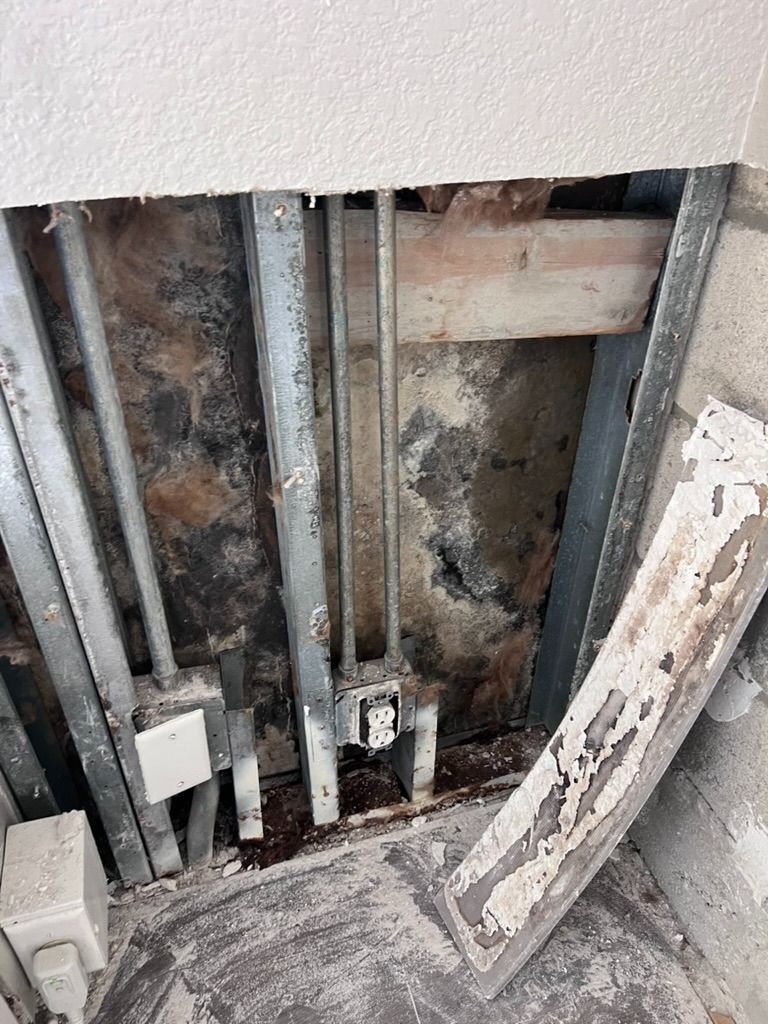
A recurring musty odor and visible staining reported across multiple rooms in a 120-room hotel, concentrated near the exterior wall unit in each room.
-
2
The Investigation
A room-by-room assessment mapped moisture readings and visually inspected the wall cavity behind each packaged terminal air conditioner (PTAC) sleeve.
-
3
The Findings
The same failure pattern appeared repeatedly. Condensation and wind-driven moisture around the PTAC sleeves had been migrating into the wall cavity for years.
-
4
Technical Explanation
A shared construction detail at the PTAC sleeve penetration, rather than an isolated plumbing or roof leak, was driving contamination across the property.

A decade of field experience, grounded in independence
Our lead assessor has spent nearly a decade in the field investigating moisture intrusion, fungal growth, and indoor air quality issues across South Florida.
- Experience: Field investigations since 2016 across residential and commercial properties.
- License: Florida State Licensed Mold Assessor, MRSA675.
- Certifications: NAMP member and Micro certified.
Part of a broader body of work
Home Enviro's research connects to two related properties, each serving a distinct purpose.
Express Mold Inspection
Handles residential inspection services and local scheduling throughout South Florida.
expressmoldinspection.com →Florida Mold Experts
Provides Florida-focused resources and regional expertise on mold and indoor air quality.
floridamoldexperts.com →Book an independent inspection today
Same-day service available throughout Miami-Dade, Broward, and Palm Beach Counties.