What's actually happening behind the walls of your Coconut Creek property?
Coconut Creek's landscaped, waterway-laced neighborhoods were largely built out between the 1970s and 1990s. Home Enviro provides independent mold inspection, moisture investigation, and indoor air quality testing so homeowners, buyers, and condo boards have documented answers, not guesses.
A patch on a ceiling rarely tells the whole story
A discolored spot on drywall or a musty smell in a closet is a symptom, not a diagnosis. Home Enviro's inspections are built to trace that symptom back to its source, whether that's a roofing detail, a plumbing connection, or condensation forming inside a wall cavity, using instruments and documentation rather than a guess based on appearance alone.
A planned community built around water and landscaping
Coconut Creek grew from just 1,359 residents in 1970 to more than 57,000 by 2020, meaning the large majority of its homes, condominiums, and townhouses were built during the city's core development decades of the 1970s through the 1990s, with roughly 22% of housing added since 2000. Neighborhoods like Coconut Creek Park, Coral Gate, and City Center are generally described as established but not old, built mostly in that 1970 to 1999 window, while areas such as Banyan Trails reflect newer, post-2000 construction.
The city's identity is closely tied to water and landscaping: it was master-planned with waterways running through its neighborhoods and professionally landscaped common areas, and it holds distinction as the first city in Florida certified as a Community Wildlife Habitat. That kind of dense, irrigated, tree-canopied setting can keep humidity elevated close to exterior walls and foundations in a way that a drier, more open suburb would not. Coconut Creek also sits adjacent to the Monarch Hill Renewable Energy Park landfill, a detail relevant mainly to past odor concerns rather than moisture, but included here because it is a genuine, source-documented feature of the area.
Homes and condominiums built during the 1970s through 1990s development era have now had several decades of South Florida's tropical rainfall (the city averages over 57 inches of rain annually) to interact with original roofing, window, and plumbing systems, along with whatever renovations have occurred since. An inspection of a structure from this era typically gives particular attention to those aging building systems.
A consistent process, applied to Coconut Creek's housing stock
The specific emphasis shifts with each property, but the underlying process stays the same.
Visual Assessment
A systematic review of interior and exterior conditions, with particular attention to landscaping-adjacent exterior walls and grade in Coconut Creek's heavily irrigated, established communities.
Moisture Investigation
Pin and pinless moisture meter readings across walls, flooring, and areas near known plumbing or roofing penetrations, particularly relevant given the age of much of the city's housing stock.
Thermal Imaging
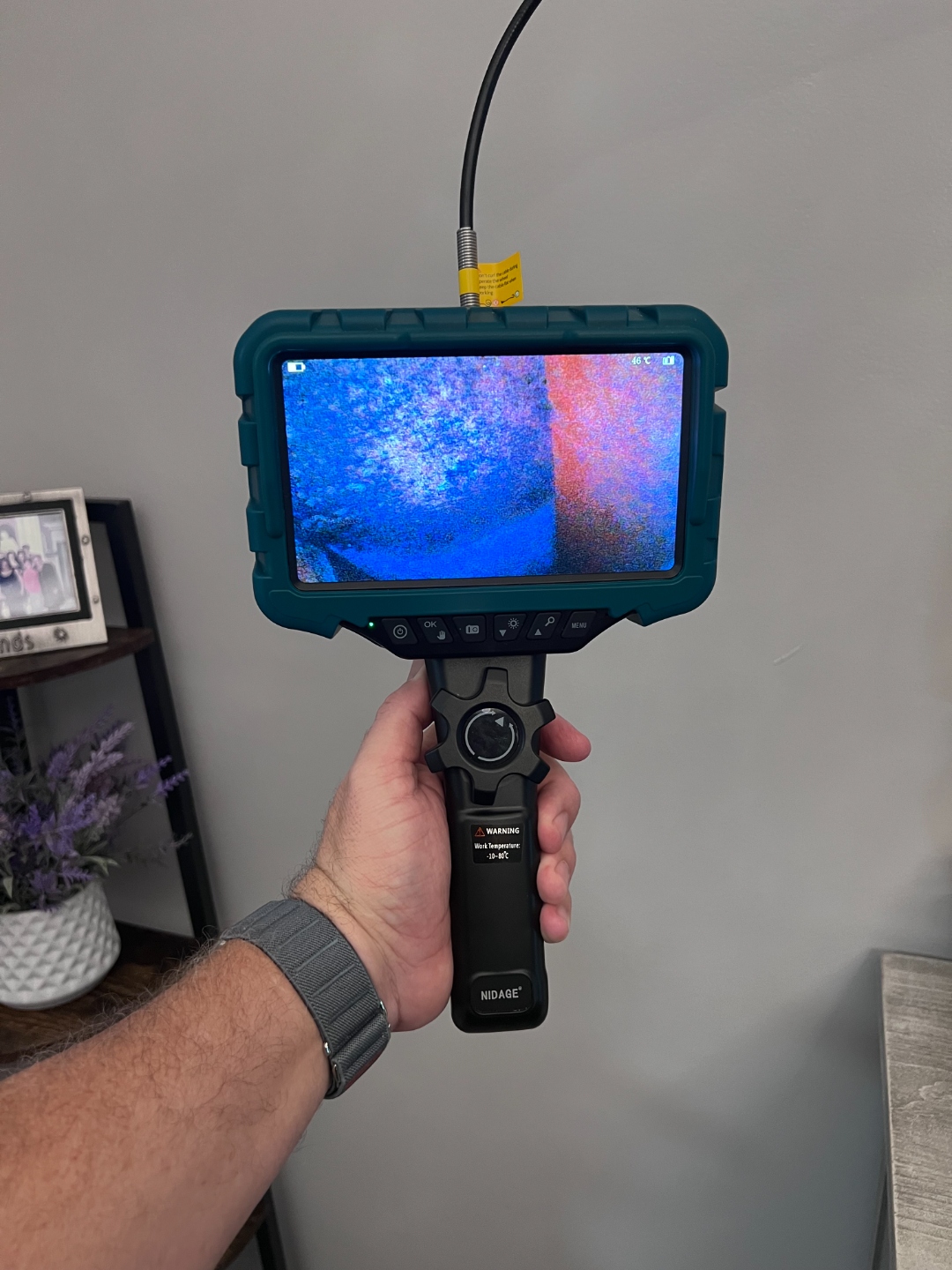
Infrared scanning identifies temperature differences on surfaces that can be consistent with trapped moisture or air leakage. Thermal imaging does not detect mold itself; any anomaly is followed up with direct measurement.
HVAC Evaluation
Review of air handlers, ductwork, and coils for condensation-related defects, especially relevant in condominium and townhouse units with shared mechanical chases.
Mold and Air Quality Testing
Air and surface sampling, processed by independent, accredited laboratories, when sampling is scientifically warranted by what the visual and instrumented findings show.
The people who inspect should not be the people who fix
Home Enviro has served South Florida since 2016, supported by more than 20 years of industry experience.
No Financial Stake in the Outcome
Home Enviro performs inspection, testing, and Post-Remediation Verification only. We never perform remediation, removal, or repair work of any kind, in Coconut Creek or anywhere else we serve.
Why the Separation Matters
An inspector who also sells remediation has an incentive to find more than what's actually present. Because Home Enviro has no such incentive, our findings can be relied on by homeowners, condo boards, and attorneys alike.
What the Report Helps You Understand
The report gives a property owner a documented, evidence-based picture of current conditions, so any decision about next steps, including hiring a remediation contractor, is made with accurate information rather than a sales pitch.
Buyers, sellers, and condo associations
Coconut Creek's housing mix of single-family homes, condominiums, and townhouses means inspection needs vary by property type and transaction stage.
Home Buyers
Given how much of the city's housing dates to the 1970s through 1990s, buyers often schedule an independent mold inspection during due diligence to document current conditions before closing. See our Home Buyers Mold Inspections service.
Sellers
A pre-listing inspection can document a property's condition in advance, giving sellers a clear record if questions arise later in negotiations.
Condominium and Townhouse Associations
With Coconut Creek's substantial condo and townhouse stock, associations evaluating a recurring moisture complaint in one or more units benefit from an independent read on whether the issue originates inside a unit or in shared building systems. See our Commercial Mold Inspections service.
Sampling is a decision, not a default
Not every inspection requires laboratory sampling. When visible growth is limited and its source is clearly identified, documentation and moisture readings may be sufficient. Sampling becomes appropriate when growth is not visible but occupants report symptoms, when a property has a history of water intrusion, or when a transaction requires objective, lab-verified documentation.
When testing is performed, air and surface samples are sent to independent, accredited laboratories, never processed in-house, and one air sample alone never proves the absence of concealed mold. Results are interpreted alongside the visual and instrumented findings collected on site, not read in isolation.
What you receive after the inspection
Photo and Data Documentation
Every finding is documented with photographs, moisture readings, and thermal imagery captured during the on-site visit to your Coconut Creek property.
Laboratory Results
When sampling was performed, independent laboratory results are included in full, distinguished clearly from visual observations and instrument readings.
Findings and Recommendations
Findings are traced back to a specific building condition rather than left as a general statement, closing with clear, independent recommendations, never a remediation sales pitch.
Other disciplines relevant to Coconut Creek properties
Mold Inspection
The core independent, evidence-based inspection process used on every Coconut Creek property.
Moisture & Water Intrusion
Investigation of moisture pathways relevant to Coconut Creek's landscaped, waterway-adjacent communities.
HVAC Mold Inspections
Air handler and ductwork inspection relevant to condominium and townhouse units in the city.
Mold inspection in Coconut Creek, answered
Coconut Creek was planned around waterways and lush, irrigated landscaping running throughout its communities. That kind of setting can keep humidity and shaded moisture close to a structure's exterior walls and foundation, which is one of several reasons a moisture investigation looks at grading, irrigation placement, and exterior wall conditions in addition to the interior.
Buildings from that era have had decades of South Florida humidity, tropical rainfall, and prior repairs or renovations to interact with their original materials. An inspection of an older structure typically pays close attention to areas where roofing, plumbing, or window systems may have been altered or aged past their original service life, since those are common points where moisture can enter unnoticed.
The core methodology, visual assessment, moisture mapping, thermal imaging, and sampling when warranted, stays the same. In a condominium or townhouse, we also account for shared walls, common HVAC chases, and unit-to-unit adjacency, since moisture or air quality issues in attached housing can sometimes originate outside the unit being inspected.
No. Thermal imaging identifies temperature differences on a surface, which can indicate a pattern consistent with trapped moisture or an air leak. It does not detect mold itself. Any temperature anomaly we flag is followed up with a moisture meter reading and, where appropriate, sampling to determine what is actually happening at that location.
Many buyers and their realtors schedule an independent mold inspection during the due diligence period, particularly for homes built during the city's main development decades. An inspection gives you documented findings about a property's condition before you close, separate from the seller's disclosures.
No. Home Enviro performs inspection, testing, and Post-Remediation Verification only, and we never perform remediation, removal, or repair work. That separation means our findings are not influenced by an incentive to sell you a remediation job.
Home Enviro also serves these nearby Broward cities
Book an independent mold inspection in Coconut Creek
Serving homeowners, buyers, condo associations, and property managers throughout Coconut Creek and greater Broward County.