Mold inspection for a barrier island city of Art Deco blocks and oceanfront towers
Miami Beach was chartered as a town on March 26, 1915 and re-incorporated as a city two years later, growing from a barrier island of mangrove and planted coconut groves into one of the most densely built coastal cities in Florida. Home Enviro inspects its 1930s low rise buildings and its newest oceanfront towers with the same independent, instrument based method.
An island city where salt air, humidity, and building age all arrive together
Miami Beach packs pre war low rise buildings, midcentury hotels, and contemporary oceanfront towers onto a narrow strip of land between the Atlantic and Biscayne Bay. Every one of those buildings is exposed to salt laden air and near constant humidity, but they were designed to very different moisture control expectations, so a useful assessment comes from readings taken inside the specific building rather than from island wide generalizations.
From the 1915 town charter to today's oceanfront high rises
Residents voted to incorporate the Town of Miami Beach on March 26, 1915, and the municipality re-chartered as a city in 1917. The city occupies a barrier island and several smaller islands reached only by causeways, with the Atlantic on one side and Biscayne Bay on the other, so essentially no property on the island is far from open salt water. That geography produces steady humidity, salt spray, and wind driven rain, three conditions that push moisture into building envelopes rather than allowing them to dry easily.
South Beach contains one of the largest concentrations of early twentieth century Art Deco buildings in the country, protected as a historic district, while North Beach holds a substantial body of postwar midcentury architecture. Those buildings were constructed long before current expectations for flashing, window sealing, and interior vapor management, and most have been renovated several times, which leaves layered wall and floor assemblies where water can travel and hide. Historic district review also limits how much of an exterior can be altered, so non invasive investigation and careful documentation matter more than they might elsewhere.
Elevation is the other defining factor. Much of the island sits only a few feet above sea level, and the city has invested heavily in stormwater pumps, raised roads, and seawall work to manage tidal and rainfall flooding in its lower lying neighborhoods. For an inspection, that means ground floor units, parking podiums, elevator pits, and mechanical rooms deserve as much attention as the upper floor unit that reported the complaint, and it means an owner's account of past street or garage flooding is genuinely useful background rather than an aside.
Scaled to historic low rise buildings and oceanfront towers alike
Visual Assessment
A systematic review adapted to the building's era, from a pre war historic district low rise to a midcentury hotel conversion or a current oceanfront tower.
Moisture Investigation
Moisture mapping focused on the exposures that matter on a barrier island: salt air, wind driven rain at windows and balconies, and low elevation ground floor spaces.
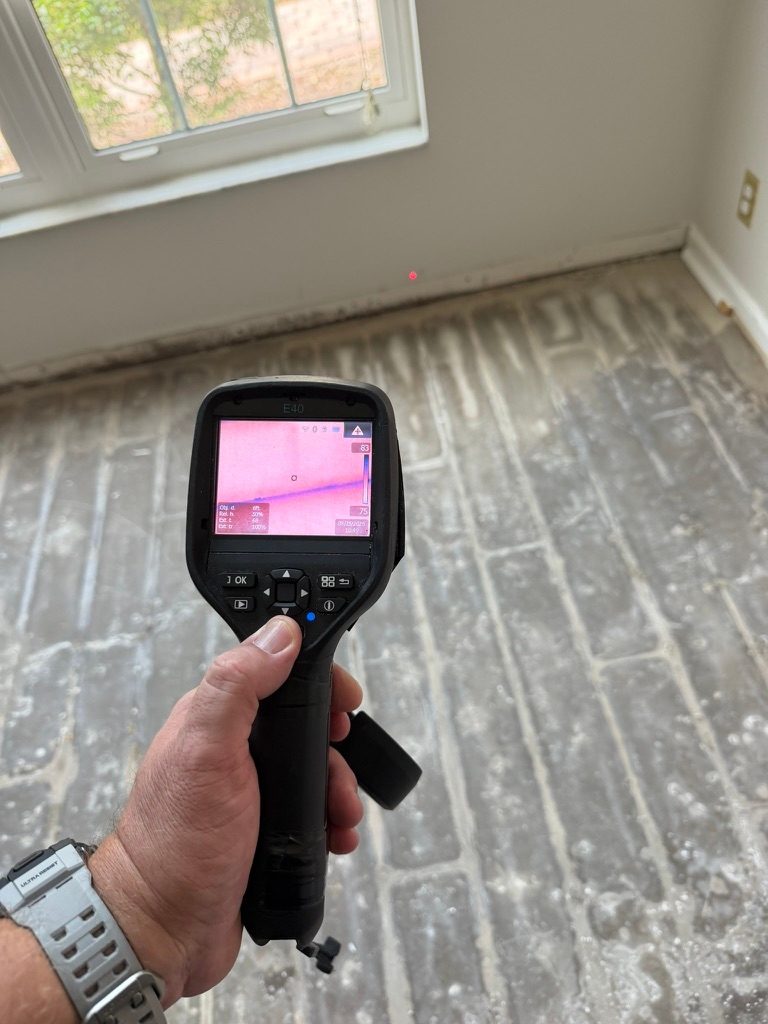
Thermal Imaging
Infrared scanning identifies temperature differences that can be consistent with trapped moisture. It does not detect mold directly; any anomaly is confirmed with a direct instrument reading.
HVAC Evaluation
Air handler and ductwork review, including the closet mounted equipment common in condominium units and the shared systems found in older converted buildings.
Mold and Air Quality Testing
Independent, accredited laboratory sampling performed when the visual and instrumented findings scientifically warrant it.
Built for an island of condominium associations and shared building envelopes
Home Buyers
An independent assessment before closing on an island where building age and past water exposure vary widely from block to block. See our Home Buyers Mold Inspections service.
Sellers
A documented pre-listing assessment gives an owner a clear record of condition before a buyer's inspector arrives, which is useful in a market dominated by resale units.
HOA and Condo Boards
On an island where most residents live in associations, boards need findings that distinguish a unit level problem from a shared envelope or riser problem. See our Commercial Mold Inspections service.
Property Managers
Technical background for recurring humidity, odor, or staining complaints in seasonally occupied units and short term rental inventory.
No remediation contract waiting behind our findings
Home Enviro has served South Florida since 2016, supported by more than 20 years of industry experience. We perform independent mold inspection, testing, and Post Remediation Verification exclusively, and we never perform remediation, removal, or repair work of any kind.
On an island where most complaints eventually involve a shared wall, a shared riser, or a shared roof, that independence matters: our findings are not shaped by an incentive to expand a remediation scope. The report documents what is present and where it most likely originates, and the association or owner decides what happens next, including who to hire for any remediation work.
Objective results for historic buildings and shared towers alike
Sampling is appropriate when growth is not clearly visible but symptoms are reported, when a property has a documented history of water intrusion, or when an HOA or condo board needs objective, lab-verified documentation to support a decision affecting multiple owners.
Visual Observations
What can be seen directly during the walkthrough: staining, discoloration, or suspected microbial growth.
Instrument Readings
Moisture meter and thermal imaging data, reported as a distinct category of evidence from a visual observation.
Laboratory Findings
Independent lab analysis when sampling is performed. One air sample never proves the absence of concealed mold.
What you receive after the inspection
Photo and Data Documentation
Every finding is documented with photographs, moisture readings, and thermal imagery from your Miami Beach property.
Laboratory Results
When sampling was performed, independent laboratory results are included in full, clearly separated from field observations.
Findings and Recommendations
Findings trace back to a specific building condition, closing with clear, independent recommendations suitable for an individual owner or an association board.
Other disciplines relevant to Miami Beach properties
Commercial Mold Inspections
Assessments scaled to the condominium associations, hotels, and mixed use buildings that dominate the island.
HVAC Mold Inspections
Air handler and ductwork inspection for closet mounted unit equipment and older shared systems.
Mold Inspection
The core independent, evidence based inspection process used on every Miami Beach property.
Mold inspection in Miami Beach, answered
It changes the emphasis. The town was chartered on March 26, 1915 and much of South Beach was built in the following decades, well before current practice for flashing, window sealing, and interior vapor control. Those buildings have also been renovated repeatedly, so assemblies are often layered. The work relies more on moisture readings and thermal scanning at windows, parapets, and plumbing walls, and less on the assumption that a visible surface tells the whole story.
Miami Beach sits only a few feet above sea level, and the city has pursued stormwater pumping, road raising, and seawall work to manage tidal and rainfall flooding. Those projects address the street, not the inside of a building, so ground floor units, garages, elevator pits, and mechanical rooms in low lying areas remain the places where water has historically collected. Knowing a property's flooding history helps focus an inspection on the spaces most likely to hold residual moisture.
Orientation genuinely matters. An oceanfront elevation takes the most direct salt spray and wind driven rain, which concentrates stress at sliding door tracks, window perimeters, and balcony slab edges. Bay facing and courtyard facing units often see less direct wetting but can dry more slowly where air movement is limited and shading is heavy. Both are evaluated with instrument readings rather than assumptions about which side of a building is safer.
Frequently, yes. Repeated renovation is normal in older island buildings, and each round can add a finish layer, relocate plumbing, or enclose an original detail. The result is an assembly where water entering at one point may surface somewhere unrelated. An inspection starts non invasively, mapping moisture and temperature patterns to work out where water is actually sitting before anything more intrusive is even considered.
No. Thermal imaging shows temperature differences at a surface that can be consistent with trapped moisture, but it cannot see mold or establish on its own what is causing the difference. Any anomaly is verified with a moisture meter, and laboratory sampling is used only when that follow up evidence makes testing scientifically warranted.
No. Home Enviro performs independent inspection, testing, and Post Remediation Verification exclusively, and we never perform remediation, removal, or repair work of any kind. If remediation proves necessary, you or your association select a separate contractor, and our documented findings give that contractor an unbiased starting point.
Home Enviro also serves these nearby Miami-Dade County areas
Book an independent mold inspection in Miami Beach
Serving unit owners, buyers, condominium boards, and property managers throughout Miami Beach and greater Miami-Dade County.