Mold inspection for a farm edge city with two distinct building eras
Homestead incorporated on February 8, 1913, making it the second oldest city in Miami-Dade County after Miami, and it grew up around a Florida East Coast Railway station on the edge of farm country. Today it holds a genuinely split housing stock: buildings that predate 1992 alongside large stretches rebuilt or newly built since. Home Enviro inspects each on its own evidence.
Pre-1992 construction and post-1992 rebuilding side by side
Homestead and the surrounding communities of south Miami-Dade absorbed the heaviest effects of Category 5 Hurricane Andrew on August 24, 1992. The rebuilding and subsequent development that followed mean that two houses on nearby streets can belong to entirely different construction generations, with different roof systems, different envelope details, and different code requirements behind them. That difference is decisive for a moisture assessment.
Older, more affordable housing at the edge of the Redland farm belt
Homestead traces to the Florida East Coast Railway's push toward Key West. A station opened in July 1904, settler William D. Horne bought the first lot in the new town site that October, and the building he put up still stands as the historic Redland Hotel. The city incorporated on February 8, 1913, second only to Miami among Miami-Dade municipalities. The name came from the homesteading then underway to the north and northwest, in the area still known as Redland, and that agricultural belt remains the city's immediate neighbor.
Homestead sits roughly twenty six miles southwest of Miami at an elevation of about three feet, between Biscayne National Park to the east and Everglades National Park to the west; in 2013 the city formally designated itself the gateway community for both. That is a genuinely different setting from coastal Miami-Dade. It is inland and, at its margins, agricultural, with open farmland, irrigation, packing and equipment structures, and a flat water table close to the surface. Homes here are on average older and more affordable than the county norm, which in practice often means original or once replaced roofing, aged drain lines, and cooling equipment carried well past its design life.
The 1992 storm split the timeline. Structures that survived it are now well past thirty years old and were built to earlier code, while large areas were rebuilt or newly developed afterward under stricter standards. Neither group is automatically sound or automatically suspect. For an older house, the recurring places worth direct attention are the roof plane and its penetrations, the slab perimeter on low ground, and long serving plumbing. For newer construction, the questions shift toward envelope and window details, stucco terminations, and cooling systems that have to control humidity in a hot, wet, low lying location for most of the year.
Scaled to older farm edge houses and newer subdivisions alike
Visual Assessment
A systematic review adapted to the property's construction era, which in Homestead usually means identifying whether the building predates the 1992 rebuilding period or followed it.
Moisture Investigation
Moisture mapping tailored to low, flat inland ground near farmland: slab perimeters, roof penetrations, irrigation and drainage against the foundation, and long serving plumbing.
Thermal Imaging
Infrared scanning identifies temperature differences that can be consistent with trapped moisture. It does not detect mold directly; any anomaly is confirmed with a direct instrument reading.
HVAC Evaluation
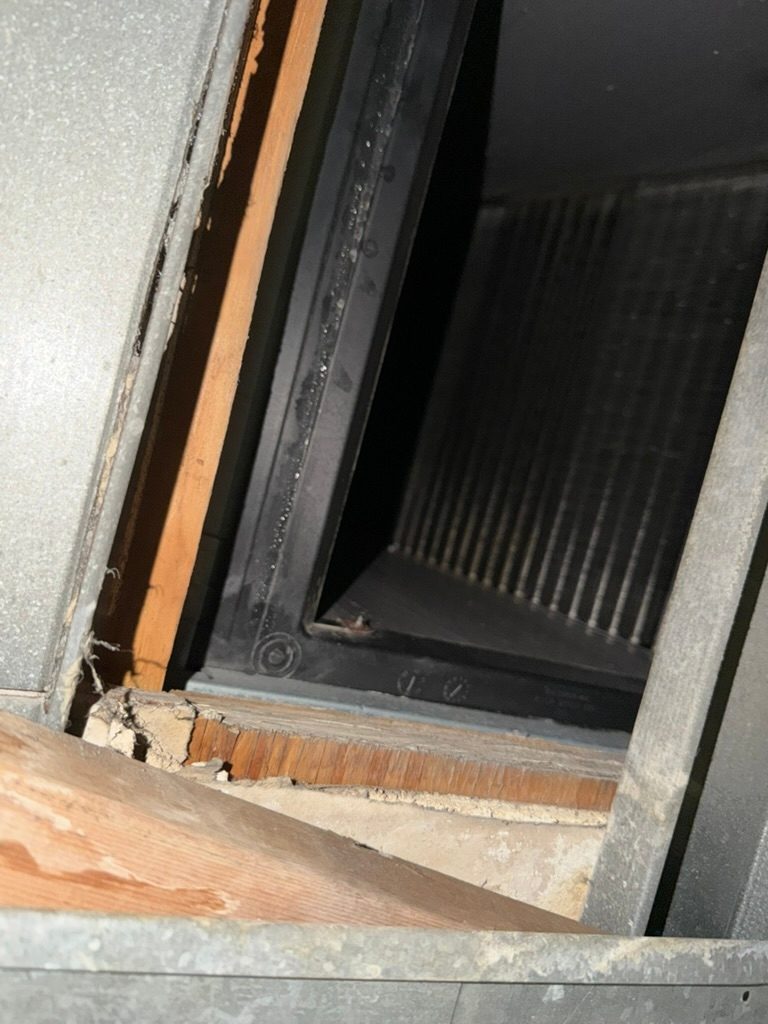
Air handler and ductwork review, with attention to humidity control in equipment that has often been kept in service well past its original design life.
Mold and Air Quality Testing
Independent, accredited laboratory sampling performed when the visual and instrumented findings scientifically warrant it.
Built for a market of older affordable homes and newer subdivisions
Home Buyers
An independent read on a property's condition before closing, which matters most in a city where a home's construction era is often the single biggest variable. See our Home Buyers Mold Inspections service.
Sellers
A documented pre-listing inspection gives sellers a clear record of a property's condition ahead of buyer due diligence, which is useful when an older home is competing against newer inventory nearby.
Associations and Boards
For the townhome and single family associations built during and after the rebuilding period, findings that separate a unit level issue from a shared roof or wall issue. See our Commercial Mold Inspections service.
Property Managers
Technical background for managers and owners evaluating recurring moisture or air quality complaints across older and newer Homestead housing in the same portfolio.
No remediation contract waiting behind our findings
Home Enviro has served South Florida since 2016, supported by more than 20 years of industry experience. We perform independent mold inspection, testing, and Post Remediation Verification exclusively, and we never perform remediation, removal, or repair work of any kind.
For an owner of a house that predates the rebuilding period, or a buyer weighing a newer subdivision home, that independence removes a real conflict of interest: findings are not shaped by an incentive to recommend a larger scope of remediation work. The report documents what is present and where it most likely originates, leaving the decision about next steps, including who to hire for any remediation, entirely up to the property owner or association.
Objective results for older houses and newer construction alike
Sampling is appropriate when growth is not clearly visible but symptoms are reported, when a property has a documented history of water intrusion, or when an owner, board, or manager needs objective, lab verified documentation to support a decision.
Visual Observations
What can be seen directly during the walkthrough: staining, discoloration, or suspected microbial growth.
Instrument Readings
Moisture meter and thermal imaging data, reported as a distinct category of evidence from a visual observation.
Laboratory Findings
Independent lab analysis when sampling is performed. One air sample never proves the absence of concealed mold.
What you receive after the inspection
Photo and Data Documentation
Every finding is documented with photographs, moisture readings, and thermal imagery from your Homestead property.
Laboratory Results
When sampling was performed, independent laboratory results are included in full, clearly separated from field observations.
Findings and Recommendations
Findings trace back to a specific building condition, closing with clear, independent recommendations suitable for an individual owner, a manager, or an association board.
Other disciplines relevant to Homestead properties
Commercial Mold Inspections
Assessments suited to Homestead's townhome associations, agricultural support buildings, and commercial property.
HVAC Mold Inspections
Air handler and ductwork inspection, with attention to humidity control in long serving cooling equipment.
Mold Inspection
The core independent, evidence based inspection process used on every Homestead property.
Mold inspection in Homestead, answered
Only indirectly. Homestead is the second oldest city in Miami-Dade County after Miami, and it grew around a Florida East Coast Railway station that opened in 1904, but individual houses span a very wide range of eras. What actually matters for an inspection is your building's own construction period, roof system, plumbing age, and cooling equipment, all of which are established on site rather than inferred from the city's founding date.
Homestead and neighboring south Miami-Dade communities suffered the greatest effects of Category 5 Hurricane Andrew on August 24, 1992, and the rebuilding that followed created two distinct construction generations within the same city. Knowing which side of that line a property falls on tells an inspector what roof and envelope details to expect, though it never substitutes for direct readings on the specific building.
It adds context rather than changing the method. Homesteading north and northwest of the original town site gave the city its name, and that agricultural belt is still the immediate neighbor, which means open land, irrigation, and outbuildings are common at the city's margins. Irrigation and drainage patterns against a foundation are worth checking directly, and agricultural support structures are usually assessed as their own building type.
Generally more useful, because age concentrates the variables that matter. An older home is more likely to have original or once replaced roofing, aged drain lines, and cooling equipment kept past its design life, and it is also more likely to have undocumented repairs. An inspection replaces guesswork about all of that with photographs, moisture readings, and, where warranted, accredited laboratory results.
No. Thermal imaging detects temperature differences on a surface that can be consistent with trapped moisture, but it cannot see mold itself or confirm what is causing the temperature change. Any anomaly found is checked with a moisture meter, and laboratory sampling is used only when that follow up evidence makes testing scientifically warranted.
No. Home Enviro performs independent inspection, testing, and Post Remediation Verification exclusively, and we do not perform remediation, removal, or repair work of any kind. If remediation turns out to be necessary, you would select and hire a separate contractor, and our documented findings give that contractor a clear, unbiased starting point.
Home Enviro also serves these nearby Miami-Dade County cities
Book an independent mold inspection in Homestead
Serving homeowners, buyers, landlords, and association boards throughout Homestead and greater Miami-Dade County.