Commercial Mold Inspections
Independent, large-scale mold and moisture assessments for hotels, offices, multi-unit residential buildings, and full property portfolios, scoped and prioritized using a disciplined, room-by-room methodology.
Built for scale, not just square footage
Commercial and multi-unit properties fail differently than single-family homes. Our assessments are structured around how these buildings are actually constructed, occupied, and managed.
Hotels & Hospitality
Guest-room properties with repeated unit layouts, exterior wall units, and shared construction details that can produce the same failure across dozens or hundreds of rooms.
Office Buildings
Multi-tenant and single-tenant office space, where HVAC systems, shared plenums, and building envelope conditions affect air quality across multiple occupied suites at once.
Multi-Unit Residential
Condominiums and apartment communities, where a moisture or air quality complaint in one unit may be the first visible sign of a defect repeated throughout the building.
Property Portfolios
Owners and managers overseeing more than one building, who need consistent methodology and comparable documentation across every property in a portfolio.
Attorneys & Engineers
Independent field documentation and technical reasoning suitable for supporting real estate, insurance, and structural or mechanical engineering matters.
Property Managers
Technical background for evaluating recurring moisture or air quality complaints across a portfolio, before they escalate into larger claims or tenant disputes.
Scoping and prioritizing a large property
A 50-unit condominium or a 120-room hotel cannot be assessed the same way as a single home. The scope has to be structured so that early findings inform where we look next.
Room-by-Room or Unit-by-Unit Mapping
Rather than treating a large property as one undifferentiated space, we map moisture readings and visual conditions room by room or unit by unit. This produces a comparable dataset across the entire property instead of a single spot-check.
Identifying Shared Construction Details
Many large-scale failures are not isolated incidents. When the same wall assembly, mechanical penetration, or envelope detail is repeated throughout a building, a defect in one location is likely to exist wherever that detail was used.
Letting Early Findings Prioritize Later Rooms
Once a repeated pattern is confirmed, the remaining rooms or units are prioritized based on what earlier findings revealed, rather than inspected with equal, undirected effort. This is the same logic that shaped the hotel investigation summarized below.
Distinguishing Isolated Issues From Systemic Ones
Part of the scoping process is determining whether a complaint reflects an isolated plumbing or roof leak, or a systemic issue tied to how the building was constructed. That distinction changes the scope, the cost, and the remediation planning that follows.
Our mold inspection and HVAC mold inspection services apply this same disciplined methodology, scaled to the size of a single unit or an entire property.
A 120-room hotel assessment, traced to its origin
This investigation covered every room of a 120-room hotel property, following a consistent moisture and mold failure pattern back to a single, repeated construction defect. Client and property details remain de-identified.
-
1
The Problem
A recurring musty odor and visible staining reported across multiple rooms in a 120-room hotel, concentrated near the exterior wall unit in each room.
-
2
The Investigation
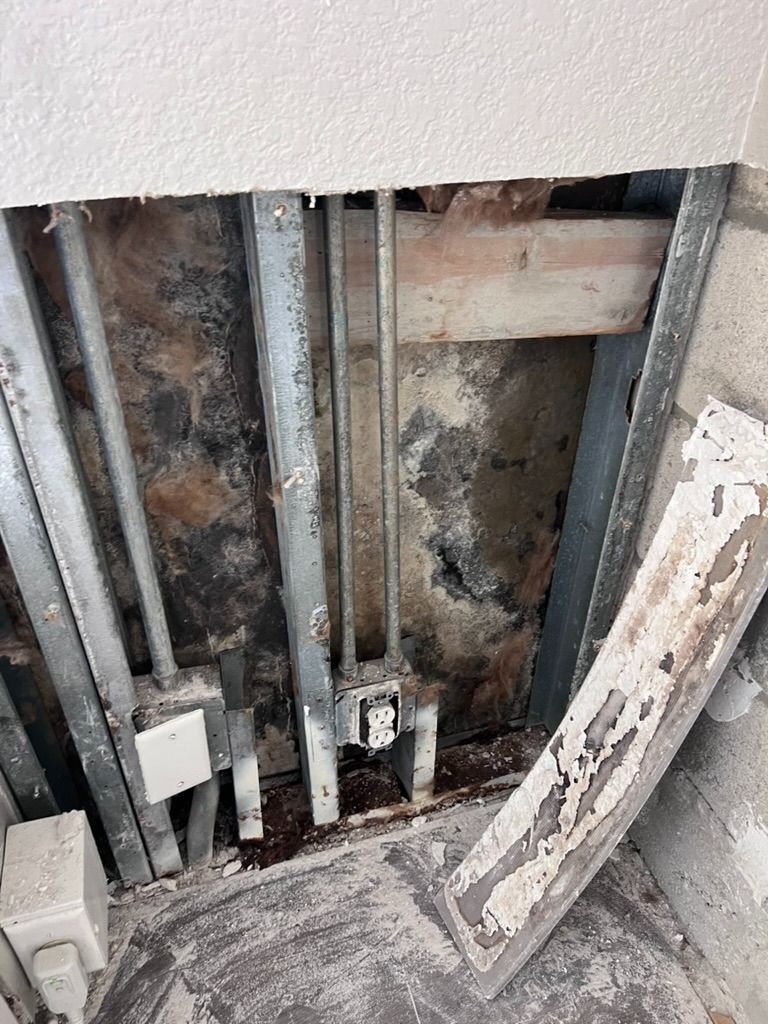
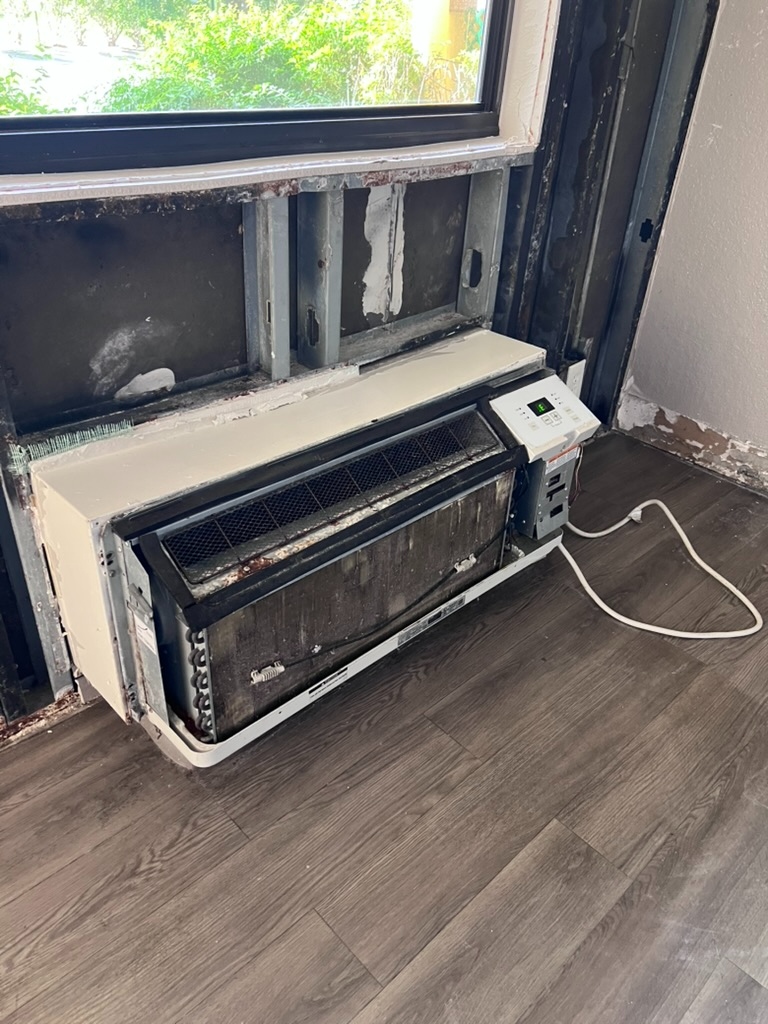
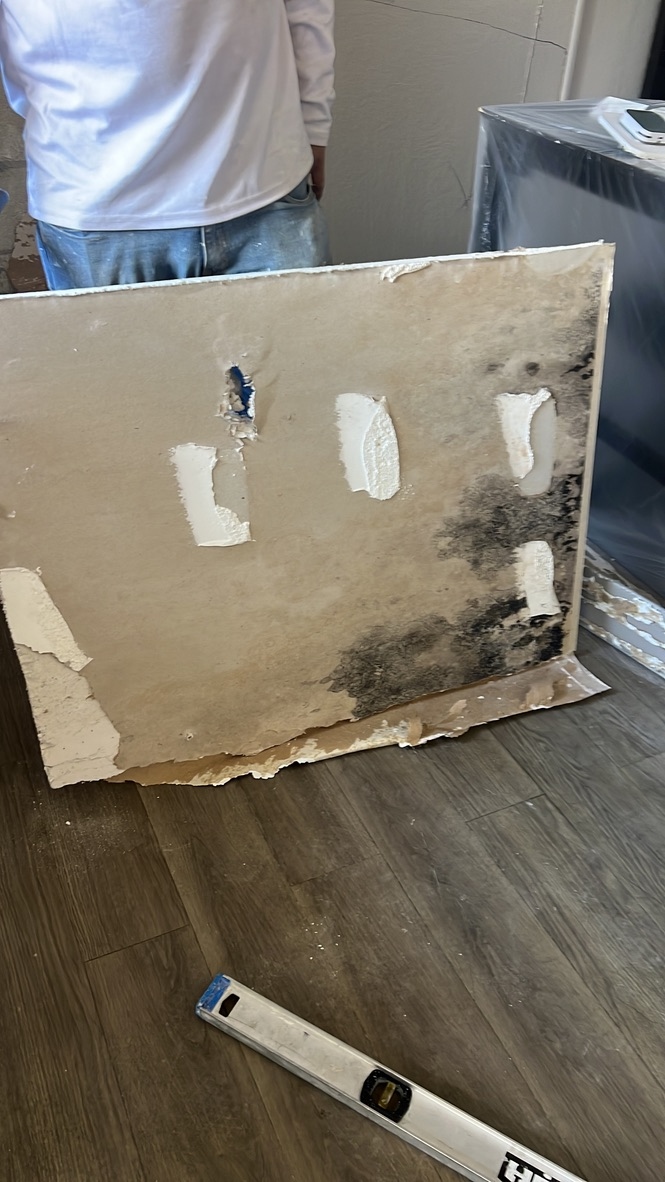
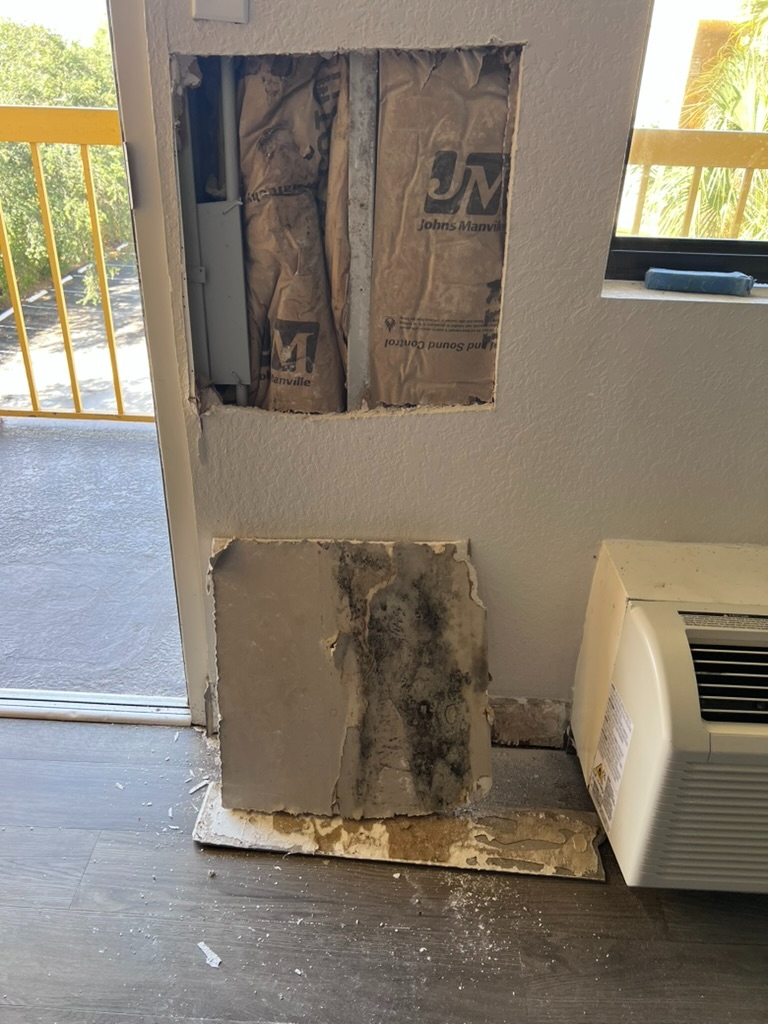
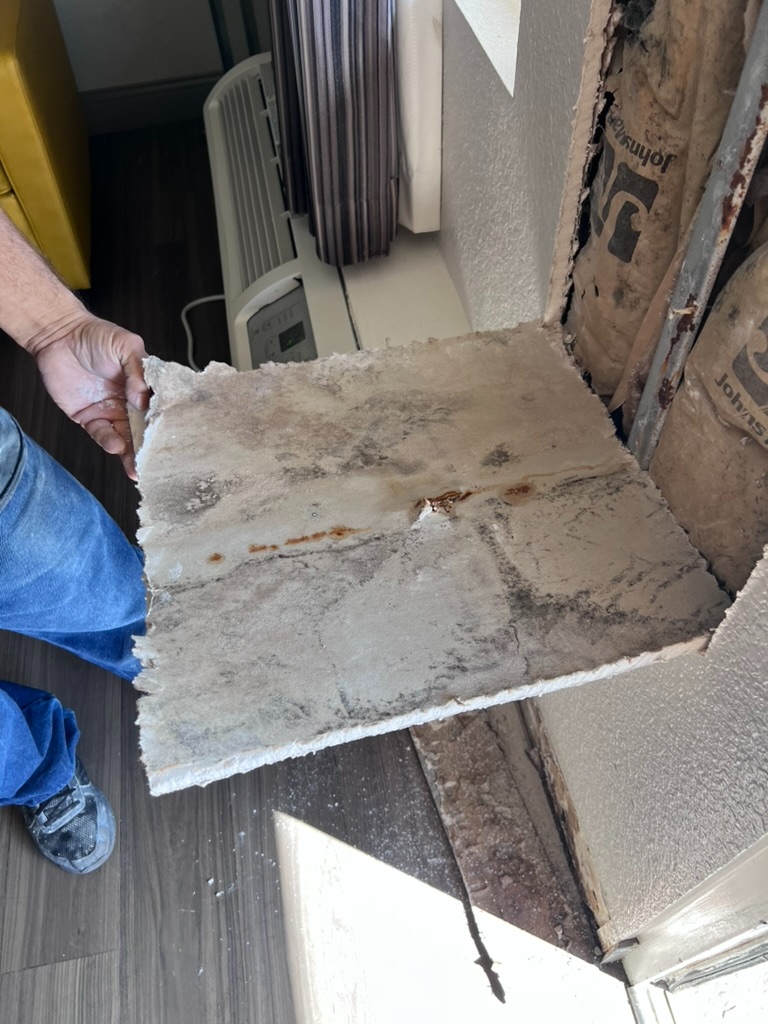
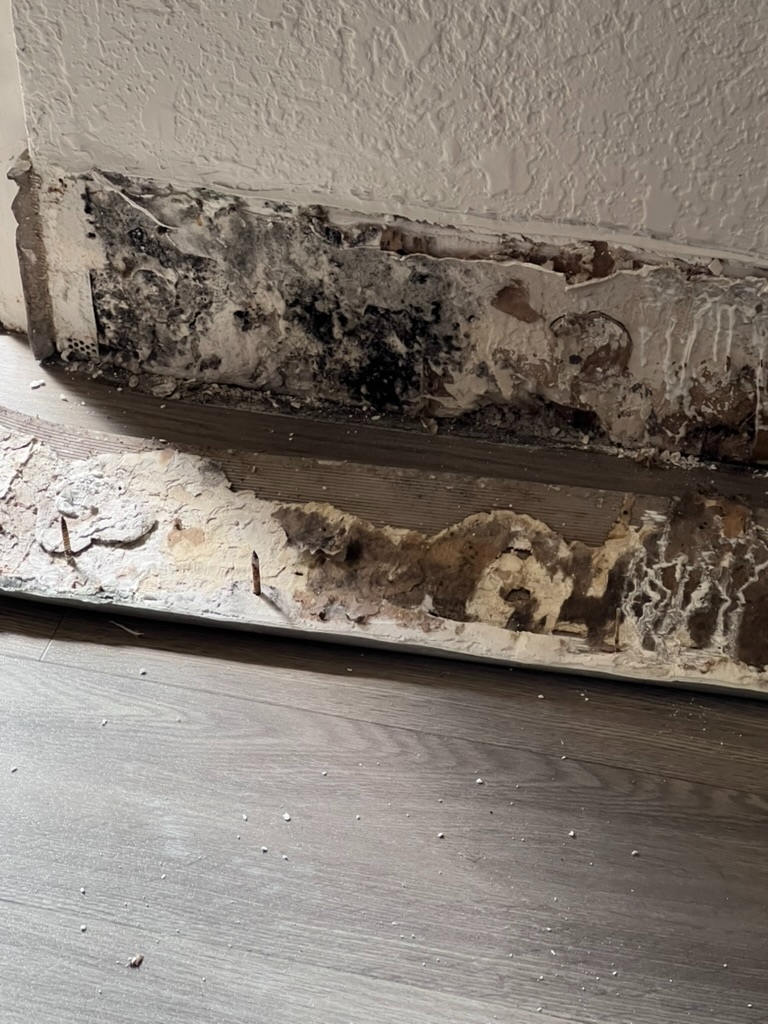
A room-by-room assessment mapped moisture readings and visually inspected the wall cavity behind each packaged terminal air conditioner (PTAC) sleeve. Flooring, drywall, and insulation were selectively opened where readings were elevated.
-
3
The Findings
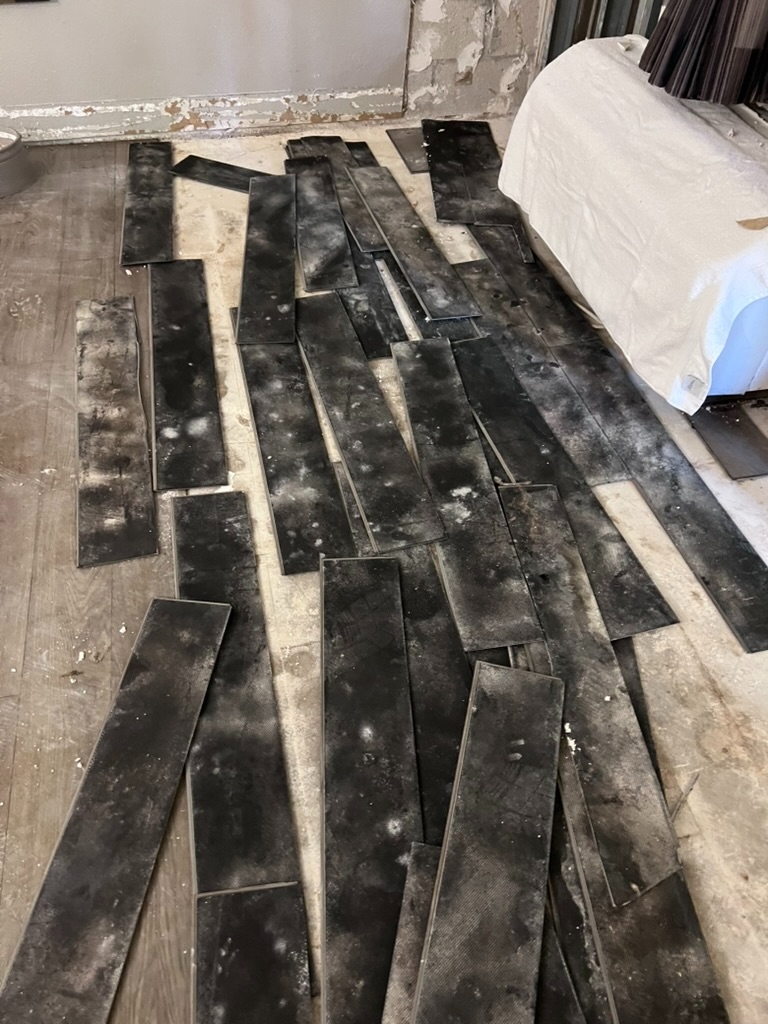
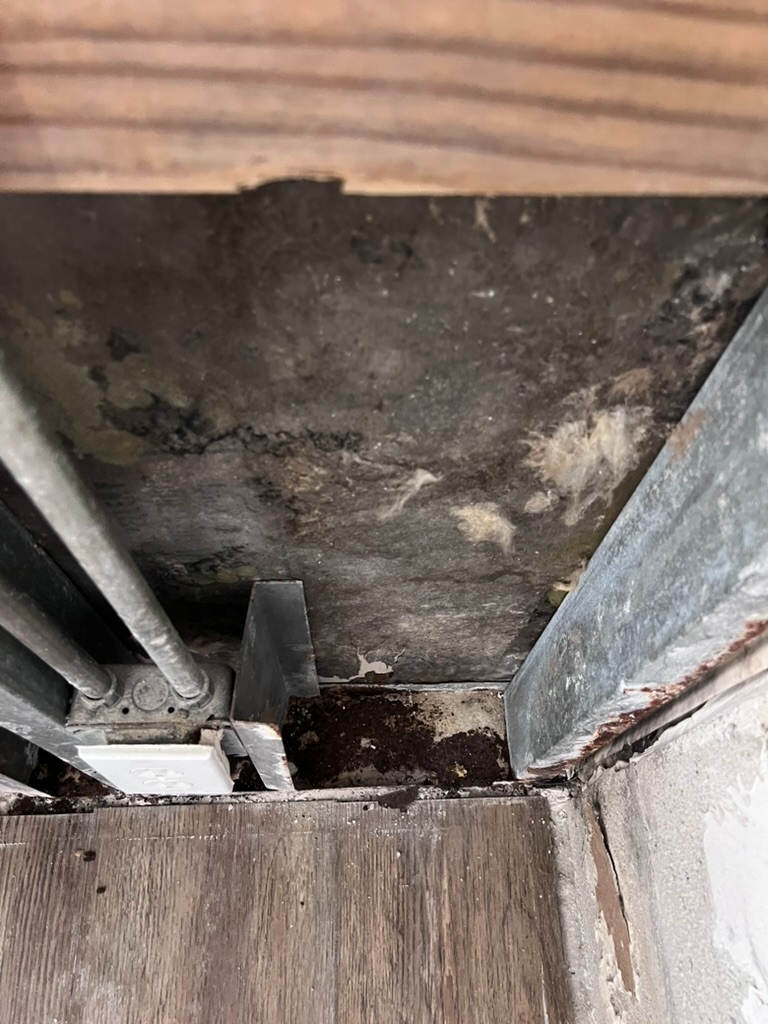
The same failure pattern appeared repeatedly. Condensation and wind-driven moisture around the PTAC sleeves had been migrating into the wall cavity for years, saturating insulation, framing, and the base of the flooring in an increasing share of rooms.
-
4
Technical Explanation
A shared construction detail at the PTAC sleeve penetration, rather than an isolated plumbing or roof leak, was driving contamination across the property. Because the defect was structural and repeated by design, findings in one room reliably predicted conditions in others, which shaped how the remaining rooms were prioritized for assessment.
Inside a 120-room hotel assessment
Documentation from a large-scale commercial mold assessment, shown alongside the case summary above.
Technical background for evaluating a portfolio
Property managers overseeing more than one building need more than a single inspection report — they need a consistent way to evaluate recurring moisture or air quality complaints across a portfolio.
Consistent Methodology Across Properties
Applying the same moisture mapping, visual inspection, and documentation standard to every property in a portfolio makes findings comparable from one building to the next, not just within a single site.
Recognizing Recurring Failure Patterns
A complaint pattern that repeats across multiple properties, such as recurring moisture near a specific mechanical detail or building orientation, often points to a shared design or construction issue rather than unrelated, isolated incidents.
Supporting Capital Planning Decisions
Independent documentation of where and why moisture or air quality issues are occurring gives property managers and their engineers a technical basis for prioritizing repairs and capital expenditures across a portfolio.
These findings are also useful to attorneys and structural or mechanical engineers who need independent, defensible documentation to support insurance, real estate, or construction-defect matters. Explore our case studies or review our mold inspection and HVAC mold inspection services for related methodology.
Common questions about commercial assessments
We inspect hotels and hospitality properties, office buildings, multi-unit residential buildings such as condominiums and apartment communities, and multi-property portfolios for owners and managers who oversee more than one building.
Large properties are assessed room by room or unit by unit rather than as a single undifferentiated space. Moisture readings and visual findings from the first rooms inspected are used to identify whether a shared construction detail is responsible, which then shapes how the remaining rooms or units are prioritized for further investigation.
When a failure is tied to a repeated construction detail, such as a shared wall penetration or a consistent PTAC sleeve installation, the same conditions tend to recur wherever that detail exists. In a documented 120-room hotel assessment, this pattern let us prioritize remaining rooms based on what earlier rooms revealed, rather than inspecting every room with equal uncertainty.
Yes. Our reports document methodology, moisture readings, visual findings, and technical reasoning in a format designed to support attorneys, structural and mechanical engineers, and property managers who need independent, defensible findings across real estate, insurance, or portfolio-management matters.
No. Home Enviro performs inspection, testing, and Post-Remediation Verification only and never performs remediation, consistent with Florida's statutory separation of assessment and remediation roles.
Book an independent commercial assessment
Same-day service available throughout Miami-Dade, Broward, and Palm Beach Counties for hotels, offices, multi-unit residential properties, and portfolios of any size.