Mold inspection for the planned neighborhoods of Coral Gables
Coral Gables was formally incorporated in April 1925 as George Merrick's planned City Beautiful, and a great deal of that original Mediterranean Revival housing stock is still standing and still lived in. Home Enviro inspects those 1920s homes, the decades of infill that followed them, and the city's condominium buildings under one independent standard.
A designed city whose oldest homes are approaching a century in service
Coral Gables was laid out as a coherent plan rather than assembled piecemeal, which gives whole districts a shared architectural vocabulary of stucco over masonry, barrel tile roofs, and deep shade. That consistency does not make moisture behavior predictable: a home's roof history, window replacements, irrigation, and grading matter far more than its street's architectural style, so an assessment is built from readings at the property itself.
From Merrick's 1925 master plan to today's shaded streets and waterway lots
Coral Gables was formally incorporated as a city in April 1925, at the height of the Florida land boom, and it was developed as a planned community by George Merrick, who named it after his family's home. Local oolitic limestone, quarried on site, became both a building material and a signature detail across the city, and one of those quarries was famously reworked into a public swimming venue rather than being filled. What that history means practically is that a substantial share of the city's oldest housing is nearing a century of continuous service, with the roofing, plumbing, and window systems having been replaced at different times and to different standards.
The city maintains an architectural review process, and its Board of Architects reviews exterior changes to properties, which keeps the streetscape consistent and also means owners cannot casually alter an exterior detail to solve a water problem. Original construction in the city predates modern flashing and vapor control practice, so investigation often begins at the places water is most likely to enter an older masonry and stucco building: roof to wall junctions, parapets and chimneys, window heads, and the base of walls where a later hardscape or planting bed sits high against the structure.
Coral Gables is also known for one of the densest mature tree canopies in the county, and heavy canopy has two consequences worth naming. Shaded walls and roofs dry more slowly after rain, and generous landscape irrigation directed near a foundation or wall base is a routine contributor to elevated moisture readings in this kind of neighborhood. Along the eastern edge of the city, properties near the Coral Gables Waterway and Biscayne Bay carry a lower lying, higher water table profile, while the condominium and multifamily buildings clustered near the Ponce de Leon and Miracle Mile business district raise the shared system questions typical of association owned buildings.
Scaled to 1920s masonry homes, later infill, and condominium buildings
Visual Assessment
A systematic review adapted to the property's era and materials, from original 1920s stucco over masonry to postwar infill and current condominium construction.
Moisture Investigation
Moisture mapping aimed at the conditions that actually drive water into these buildings: roof and parapet junctions, window heads, irrigation at wall bases, and slow drying shaded elevations.
Thermal Imaging
Infrared scanning identifies temperature differences that can be consistent with trapped moisture. It does not detect mold directly; any anomaly is confirmed with a direct instrument reading.
HVAC Evaluation
Air handler and ductwork review, including systems retrofitted into older homes where equipment, returns, and duct runs were added long after the house was built.
Mold and Air Quality Testing
Independent, accredited laboratory sampling performed when the visual and instrumented findings scientifically warrant it.
Built for a market of historic homes, renovations, and association buildings
Home Buyers
An independent read on condition before closing on a property whose original systems may be many decades old. See our Home Buyers Mold Inspections service.
Sellers
A documented pre-listing assessment lets an owner of an older Coral Gables home present a clear condition record rather than reacting to a buyer's findings late in a deal.
HOA and Condo Boards
For condominium and townhome associations, findings that separate a unit level issue from a shared roof, wall, or riser issue keep responsibility discussions grounded in evidence. See our Commercial Mold Inspections service.
Property Managers
Technical grounding for recurring moisture and air quality complaints in managed residential and small commercial properties across the city.
No remediation contract waiting behind our findings
Home Enviro has served South Florida since 2016, supported by more than 20 years of industry experience. We perform independent mold inspection, testing, and Post Remediation Verification exclusively, and we never perform remediation, removal, or repair work of any kind.
For the owner of a nearly century old home, or a board weighing whether a problem sits inside one unit or in a shared assembly, that independence removes a real conflict of interest: nothing in our findings is shaped by an incentive to recommend a larger remediation scope. We document what is present and where it most likely originates, and the owner or association chooses the next step, including which contractor to hire if remediation is needed.
Objective results for historic homes and association buildings alike
Sampling is appropriate when growth is not clearly visible but symptoms are reported, when a property has a documented history of water intrusion, or when an HOA or condo board needs objective, lab-verified documentation to support a decision affecting multiple owners.
Visual Observations
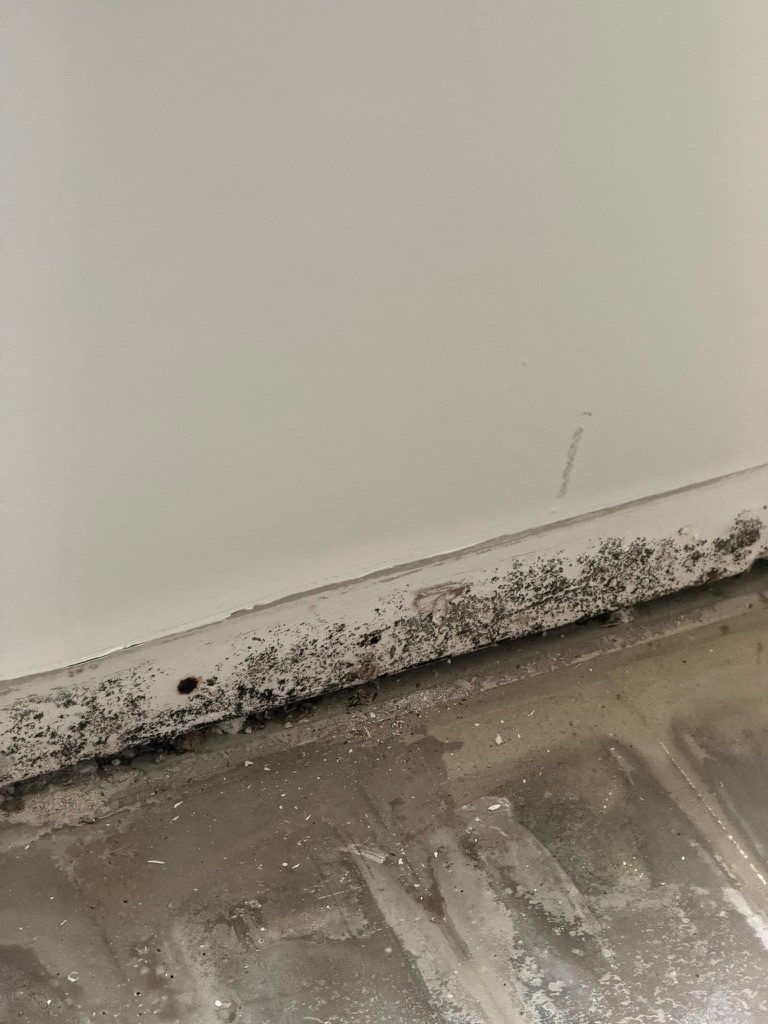
What can be seen directly during the walkthrough: staining, discoloration, or suspected microbial growth.
Instrument Readings
Moisture meter and thermal imaging data, reported as a distinct category of evidence from a visual observation.
Laboratory Findings
Independent lab analysis when sampling is performed. One air sample never proves the absence of concealed mold.
What you receive after the inspection
Photo and Data Documentation
Every finding is documented with photographs, moisture readings, and thermal imagery from your Coral Gables property.
Laboratory Results
When sampling was performed, independent laboratory results are included in full, clearly separated from field observations.
Findings and Recommendations
Findings trace back to a specific building condition, closing with clear, independent recommendations suitable for an individual owner or an association board.
Other disciplines relevant to Coral Gables properties
Commercial Mold Inspections
Assessments scaled to the city's condominium associations, townhome communities, and small commercial buildings.
HVAC Mold Inspections
Air handler and ductwork inspection, including cooling systems retrofitted into much older houses.
Mold Inspection
The core independent, evidence based inspection process used on every Coral Gables property.
Mold inspection in Coral Gables, answered
The city was formally incorporated in April 1925 and developed as a planned community by George Merrick, so many homes in the oldest districts are close to a century old. In practice that means original masonry and stucco walls, a roof and plumbing system replaced at some point by someone else, and interior finishes added in layers. An inspection concentrates on where water enters an assembly of that type, including roof to wall junctions, parapets, chimneys, and window heads, and it uses instrument readings rather than assuming a surface without staining is dry behind it.
It does not restrict the inspection itself. Our assessment is non invasive by default and does not alter an exterior, so nothing about it requires architectural review. The practical benefit runs the other way: a documented record of where moisture is entering gives an owner and their architect or contractor a clear technical basis for whatever exterior repair they later take through the city's review process.
Yes, and it is one of the more common contributors in this kind of neighborhood. Heavy shade slows how quickly walls and roofs dry after rain, and irrigation aimed at planting beds against a wall base repeatedly wets the lowest part of the structure. Neither condition is dramatic on its own, which is exactly why the resulting moisture is often measured at a wall base long before anything becomes visible indoors.
The emphasis shifts. Lots near the waterway and the bay side of the city sit lower and closer to groundwater, so slab edges, ground level floors, and any below grade or partially enclosed space get closer attention. Interior neighborhoods more often point toward roof, window, and plumbing sources. Both cases are resolved the same way, by mapping moisture where it actually reads high rather than by starting from an assumption.
No. Thermal imaging reveals temperature differences at a surface that can be consistent with trapped moisture, but it cannot see mold or explain by itself what causes the difference. Every anomaly is checked with a moisture meter, and laboratory sampling is used only when that follow up evidence makes testing scientifically warranted.
No. Home Enviro performs independent inspection, testing, and Post Remediation Verification exclusively, and we never perform remediation, removal, or repair work of any kind. If remediation proves necessary, you hire a separate contractor of your choosing, and our documented findings give that contractor an unbiased starting point.
Home Enviro also serves these nearby Miami-Dade County areas
Book an independent mold inspection in Coral Gables
Serving homeowners, buyers, condominium boards, and property managers throughout Coral Gables and greater Miami-Dade County.