HVAC Mold Inspections
Independent inspection of air handlers and ductwork for the microbial growth, condensation defects, and airflow issues that let mold take hold inside a mechanical system.
What an HVAC mold inspection covers
Inspection of air handlers, ductwork, and coils for microbial growth, condensation defects, and airflow issues.
Air Handlers & Coils
The air handling unit and its cooling coil are examined for microbial growth on cabinet surfaces, coil fins, and drain pans, along with the condensation behavior that allows growth to establish in the first place.
Ductwork & Plenum
Accessible ductwork and the plenum, the sheet metal chamber connecting the air handler to the duct system, are inspected for microbial growth, sealing defects, and the airflow issues that stem from a compromised duct system.
Condensate Drains
Condensate drains and drain pans are checked as part of the broader evaluation of condensation defects, since standing moisture at these points is a recurring contributor to microbial growth in mechanical systems.
How air and condensate move through the system
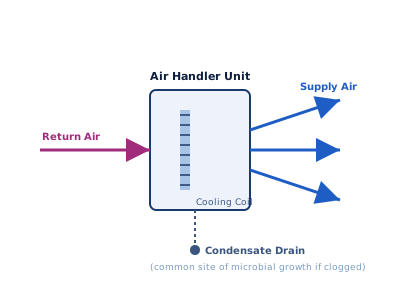
Understanding the return and supply path through an air handler helps explain where most HVAC mold problems actually begin.
HVAC Airflow
The return and supply path through an air handler, and where condensate issues typically begin.
Where HVAC mold problems typically start
Most HVAC mold contamination we document traces back to a mechanical failure, not a plumbing or roof leak.
Plenum Tape Deterioration
HVAC plenum tape is not designed to last indefinitely. As its adhesive ages under heat, humidity, and normal system operation, it loses its bond and separates from the metal it seals, opening gaps at duct and plenum connections.
Condensation on Cold Surfaces
Cold ductwork, coils, and cabinet surfaces can generate condensation when warm, humid air contacts them. Left unaddressed, this moisture supports microbial growth directly on mechanical components.
Biofilm & Microbial Growth
Once moisture and organic material (dust, fiberglass particles) are present, microbial growth can establish on cabinet insulation, plenum panels, and duct interiors, and continue spreading as the system operates.
Seeing what a routine walkthrough would miss
Thermal imaging identifies temperature gradients near supply vents, ceilings, and ductwork that can point to condensation, air leakage, or hidden moisture. It is used alongside moisture measurements and direct visual inspection of the air handler and plenum to help pinpoint where a problem is originating.
In our own HVAC case study, a thermal scan near a ceiling supply vent identified a temperature gradient during a room-by-room survey, one of several data points that led directly to the air handler and plenum.
Read the Full Case Study →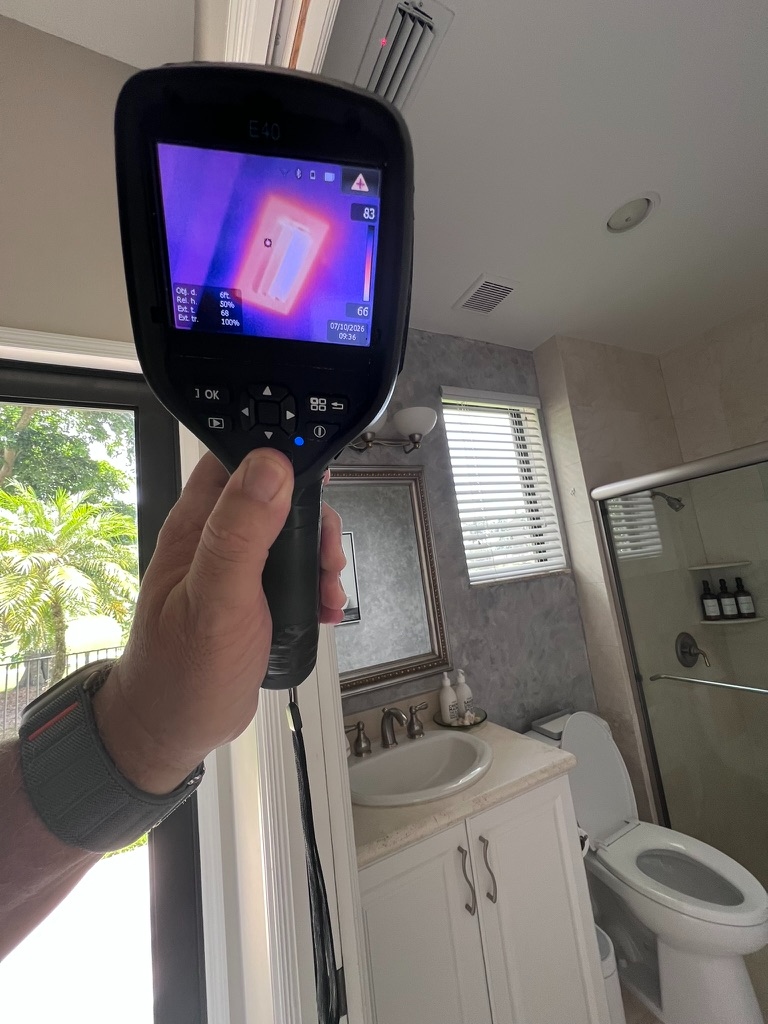
Plenum tape deterioration, documented in Weston, Florida
A homeowner in Weston, Florida reported persistent musty odors, discoloration around several supply vents, and recurring dust despite regular filter changes. The air handling unit was located in the attached garage.
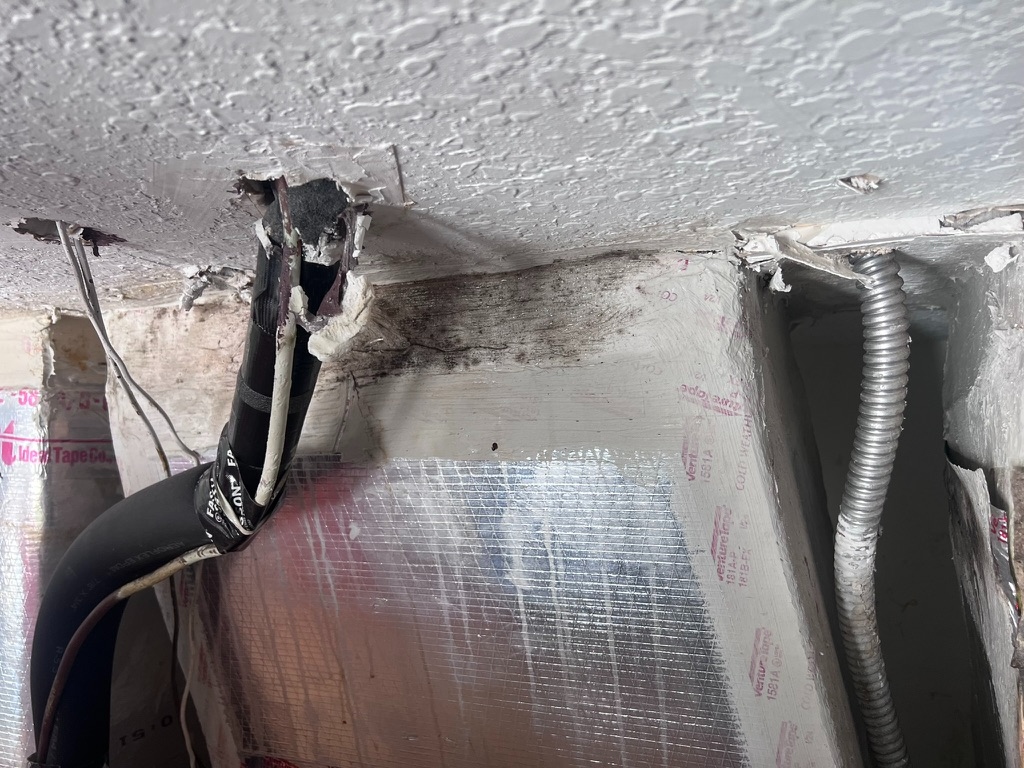
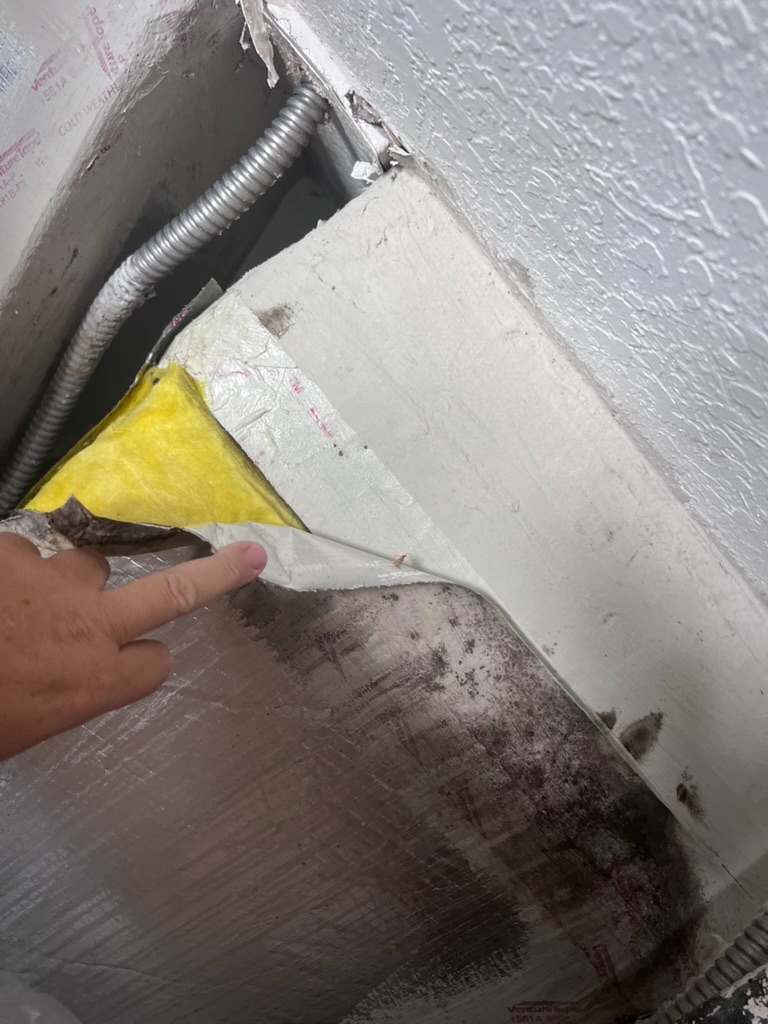
Home Enviro's inspection found significant deterioration of the adhesive on the HVAC plenum tape surrounding the air handling unit, creating visible gaps around the plenum and duct connections. Those gaps allowed contaminated garage air, dust, fiberglass particles, and mold spores into the system. Visible microbial growth was documented on the HVAC cabinet and plenum assembly, with contamination identified within portions of the connected duct system, despite the garage being unconditioned space.
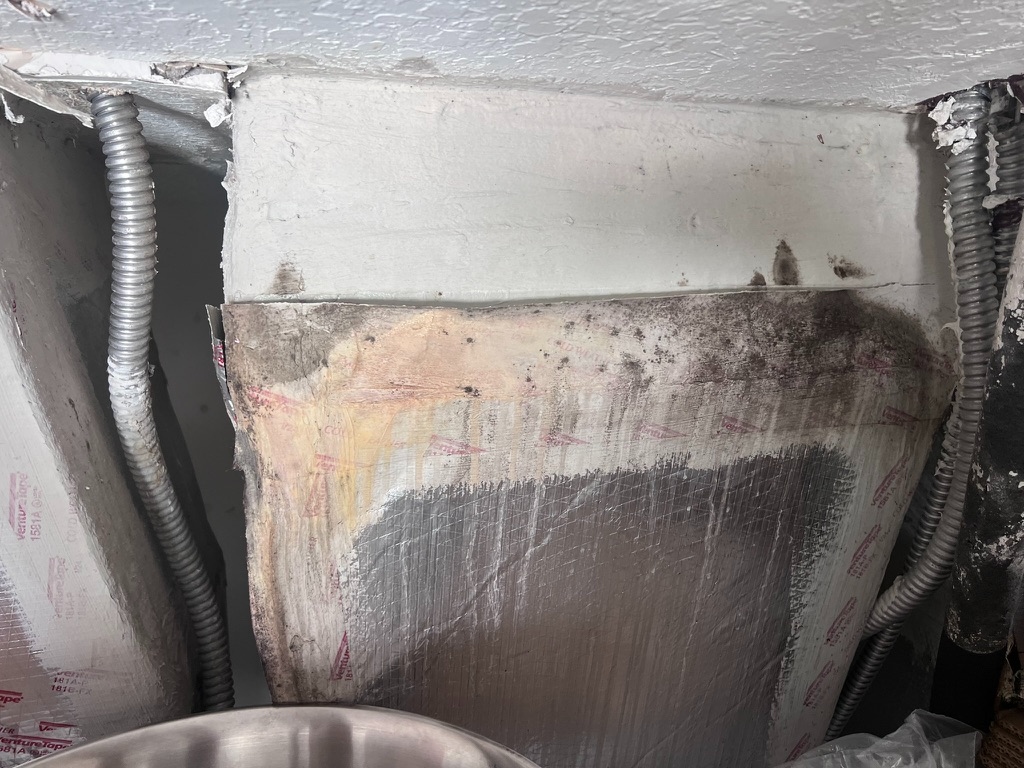
Plenum Insulation Panel, Wide View
Dark microbial growth concentrated along the top seam, adjacent to the ceiling framing.
Deteriorated Tape at Duct Connection
Failed sealing tape documented alongside dark microbial staining on surrounding insulation.
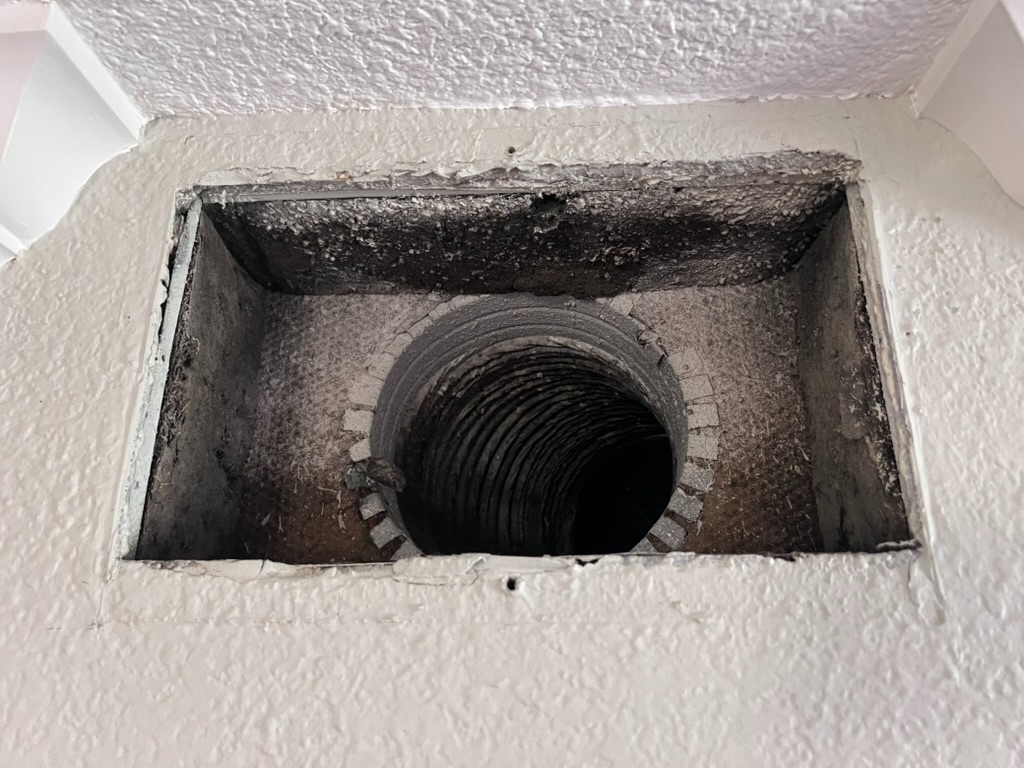
Failed Tape Adhesive, Documented On-Site
Mold visible immediately below the gap left by a failed tape seal.
A mechanical failure, not a water leak
The negative pressure created by an air handler draws mold spores, dust, fiberglass particles, garage air contaminants, and elevated humidity directly into the system whenever a seal has failed, distributing them throughout a home's ductwork every time the HVAC system operates.
Even without an active plumbing or roof leak, failed air sealing around an HVAC system can introduce mold spores and other airborne contaminants into ductwork, affecting indoor air quality throughout a home. Inspecting the duct interior directly, often with a borescope, is one of the ways we confirm how far contamination has spread.
A complete picture of indoor environmental quality
HVAC findings are often connected to broader mold and air quality questions.
HVAC mold inspection FAQ
An HVAC mold inspection evaluates the air handler, ductwork, and coils for microbial growth, condensation defects, and airflow issues. This includes the plenum, duct connections, and condensate drain, since these are common points where moisture and sealing failures allow mold to take hold.
Plenum tape seals the connections between an air handler's plenum and the surrounding ductwork. It is not designed to last indefinitely: as its adhesive ages under heat, humidity, and normal system operation, it loses its bond and separates from the metal it seals, creating gaps that outside air can pass through.
Thermal imaging identifies temperature gradients near supply vents, ceilings, and ductwork that can point to condensation, air leakage, or hidden moisture. It is used alongside moisture measurements and direct visual inspection of the air handler and plenum to help pinpoint where a problem is originating.
Yes. The negative pressure created by an air handler can draw mold spores, dust, fiberglass particles, and contaminated air directly into the system through even a small gap in a failed seal, distributing them throughout a home's ductwork every time the HVAC system operates.
Book an independent HVAC mold inspection
Same-day service available throughout Miami-Dade, Broward, and Palm Beach Counties.