Mold inspection for an inland village built out of drained Everglades adjacent farmland
Wellington was assembled starting in 1951 from land so waterlogged it was once used to grow the world's largest strawberry patch, and a levee and drainage district built in 1952 and 1953 still manage water across the community today. Home Enviro brings independent, evidence based inspection to homeowners, equestrian properties, and associations throughout the village.
A managed drainage district doesn't guarantee a dry foundation
Wellington's land was engineered out of swampland with a purpose built levee and drainage district, and that infrastructure has kept the broader community functional for more than seventy years. None of that tells you whether one specific home's grading, gutters, or slab are currently doing their job. A mold assessment relies on direct measurement and documentation at the property itself.
Engineered land, a young municipal history, and a high water table
New York accountant and investor Charles Oliver Wellington began assembling more than 16,000 acres of land here in 1951 on the advice of Arthur "Bink" Glisson, buying up what was described as frequently flooded swampland bordering the Everglades. Roughly 2,000 acres were once planted in strawberries before the tract was converted into farmland, and fewer than 100 people lived in the area as late as 1953. The village itself is much younger than that land history suggests: Wellington did not incorporate until December 31, 1995, following a referendum decided by just 138 votes, making it Palm Beach County's 38th municipality.
What makes the land usable at all is a purpose built flood control system. The Army Corps of Engineers constructed the L-40 levee along the property's southern edge in 1952 and 1953, and the State of Florida created the Acme Drainage District that same year specifically to manage water and make the acreage suitable for agriculture and later residential development. Unlike Palm Beach County's coastal cities, Wellington has no Intracoastal Waterway or oceanfront exposure; its relevant water pressure comes from a historically high inland water table and heavy seasonal rainfall rather than tidal or storm surge flooding. An EF3 tornado spawned by Hurricane Milton did strike the village directly on October 9, 2024, causing significant localized damage.
Wellington is internationally known as the Winter Equestrian Capital of the World, which shapes its housing mix: large equestrian estates and farm properties sit alongside more than 130 registered HOA, condominium, and property owners associations. That combination of acreage properties and shared governed communities is fairly distinct among Palm Beach County's incorporated cities.
Scaled to equestrian estates, single family homes, and HOA communities alike
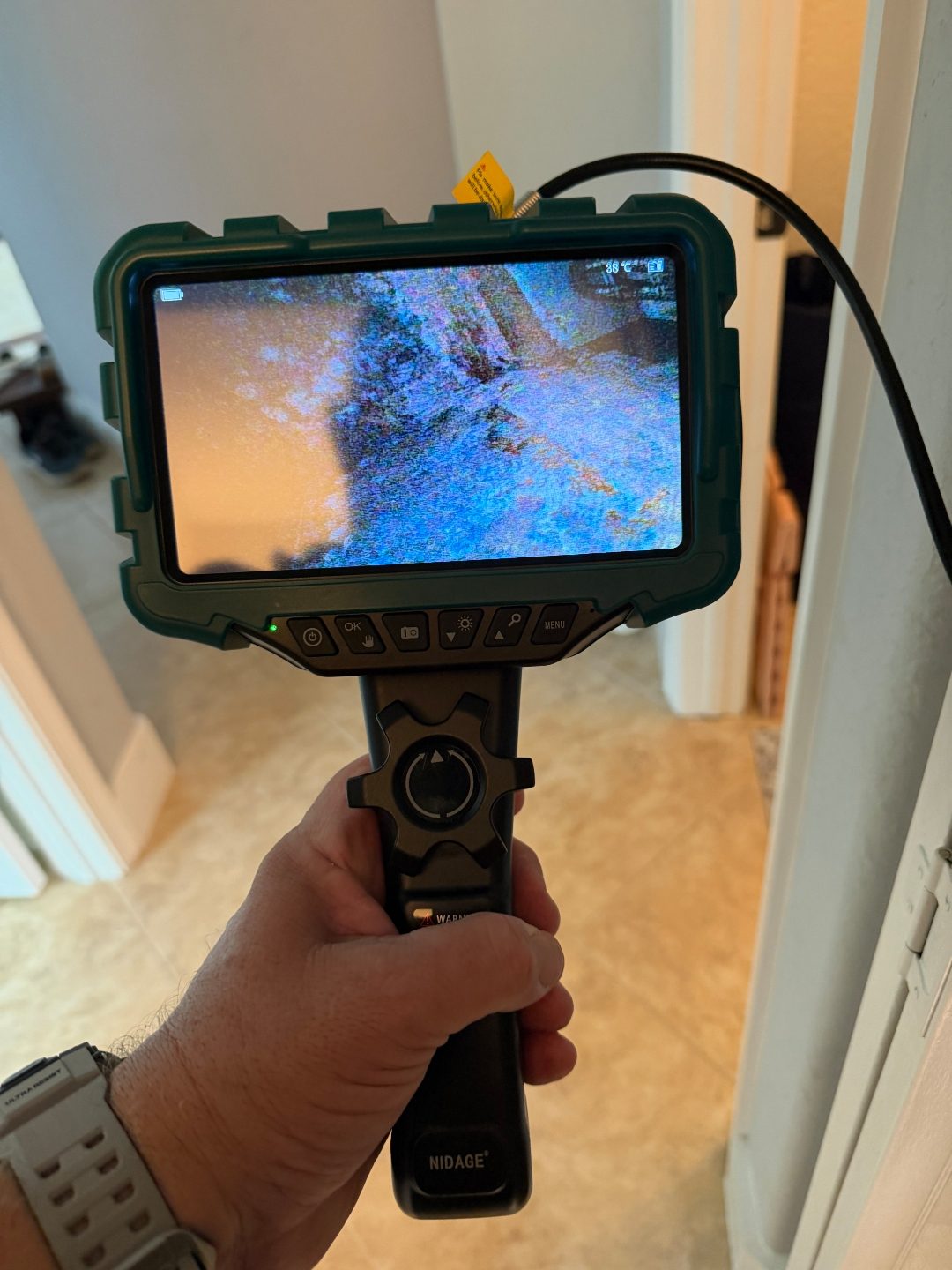
Visual Assessment
A systematic review of the structure, adapted to whether the property is a large equestrian estate, a standard single family home, or a unit within one of Wellington's HOA or condominium communities.
Moisture Investigation
Given the area's origin as reclaimed swampland and its historically high inland water table, moisture mapping around foundations and lower level walls is a genuinely relevant focus here.
Thermal Imaging
Infrared scanning identifies temperature differences that can be consistent with trapped moisture. Thermal imaging does not detect mold directly; findings are always confirmed with direct measurement.
HVAC Evaluation
Air handler and ductwork review, relevant across Wellington's mix of larger acreage homes and its HOA and condominium associations where shared mechanical systems are common.
Mold and Air Quality Testing
Independent, accredited laboratory sampling when scientifically warranted by what the visual and instrumented findings show.
Built for a village of equestrian estates and more than 130 HOA communities
Home Buyers
An independent read on a property's condition before a purchase closes, particularly useful given how varied Wellington's housing stock is between large equestrian estates and standard HOA subdivisions. See our Home Buyers Mold Inspections service.
Sellers
A documented pre listing inspection gives sellers a clear record of a property's condition ahead of buyer due diligence, whether the property is a farm estate or an HOA governed home.
HOA and Condo Boards
With more than 130 registered associations across the village, boards evaluating a moisture complaint benefit from findings that distinguish unit level issues from shared drainage or building system issues. See our Commercial Mold Inspections service.
Property Managers
Technical background for evaluating recurring moisture or air quality complaints across a managed portfolio of Wellington properties, from equestrian estates to condominium units.
No remediation contract waiting behind our findings
Home Enviro has served South Florida since 2016, supported by more than 20 years of industry experience. We perform independent mold inspection, testing, and Post Remediation Verification exclusively, and we never perform remediation, removal, or repair work of any kind.
For an HOA board managing shared liability across a Wellington community, or for an owner of a larger equestrian property with multiple structures, that independence is especially valuable: a board or owner can rely on our findings without wondering whether the scope of recommended work was inflated to generate a remediation contract. The report simply documents what is present and where it likely originates, leaving the decision about next steps, including whether and who to hire for remediation, entirely up to the property owner or association.
Objective results for shared community decisions
Sampling is appropriate when growth is not clearly visible but symptoms are reported, when a unit has a history of water intrusion, or when an HOA or condo board needs objective, lab verified documentation to support a decision affecting multiple owners.
Visual Observations
What can be seen directly during the walkthrough: staining, discoloration, or suspected microbial growth.
Instrument Readings
Moisture meter and thermal imaging data, reported as a distinct category of evidence from a visual observation.
Laboratory Findings
Independent lab analysis when sampling is performed. One air sample never proves the absence of concealed mold.
What you receive after the inspection
Photo and Data Documentation
Every finding is documented with photographs, moisture readings, and thermal imagery from your Wellington property.
Laboratory Results
When sampling was performed, independent laboratory results are included in full, clearly separated from field observations.
Findings and Recommendations
Findings trace back to a specific building condition, closing with clear, independent recommendations suitable for an individual owner or an HOA board.
Other disciplines relevant to Wellington properties
Commercial Mold Inspections
Large scale assessments suited to Wellington's HOA and community association properties.
Moisture & Water Intrusion
Focused evaluation for properties in Wellington's historically high water table environment.
Mold Inspection
The core independent, evidence based inspection process used on every Wellington property.
Mold inspection in Wellington, answered
The land that became Wellington was described as frequently flooded swampland before the Army Corps of Engineers built a levee in 1952 and 1953 and the state created the Acme Drainage District the same year to manage water across more than 16,000 acres. That drainage system has managed water in this area for over seven decades, but a well engineered district level system does not guarantee that every individual property's grading, gutters, and foundation drainage are performing as intended, which is part of what a site specific inspection actually checks.
Wellington has no coastal or Intracoastal exposure and its southwestern boundary is the Everglades rather than the Atlantic, so the moisture pressures here come mainly from heavy seasonal rainfall, irrigation on large equestrian and residential lots, and the area's historically high water table rather than saltwater intrusion. Inland homes are not immune to hidden moisture problems; humid, low lying properties can develop them just as readily as coastal ones.
Wellington's identity as a major equestrian community means many properties combine a primary residence with barns, storage buildings, or guest structures on larger lots, in addition to the more conventional HOA governed subdivisions found elsewhere in the village. A residential inspection focuses on the home itself, and the same moisture investigation, thermal imaging, and testing methodology applies regardless of what else sits on the property.
Wellington has more than 130 registered homeowners associations, condominium associations, and property owners associations spread across the village. For a board, an inspection typically needs to separate conditions specific to one home or unit from conditions in shared drainage, irrigation, or common area systems, since responsibility and next steps often differ between the two. See our Commercial Mold Inspections service for association scale work.
No. Thermal imaging shows temperature differences on a surface that can be consistent with trapped moisture or an air leak, but it does not detect mold directly. Any anomaly identified is followed up with a moisture meter reading, and sampling is used when further verification is scientifically warranted.
No. Home Enviro performs independent inspection, testing, and Post Remediation Verification only, and we never perform remediation, removal, or repair work. If remediation is needed, you would hire a separate contractor, and our report gives that contractor and you documented findings to work from.
Home Enviro also serves these nearby Palm Beach County cities
Book an independent mold inspection in Wellington
Serving homeowners, equestrian property owners, buyers, and HOA boards throughout Wellington and greater Palm Beach County.