
Moisture & Water Intrusion
Tracing water intrusion, condensation, and vapor drive back to a building's structural and mechanical root cause, not just documenting the wet spot where it happens to surface.
Water intrusion, condensation, and vapor drive
Moisture investigation is one of the core disciplines within Home Enviro's building science work: tracing water intrusion, condensation, and vapor drive back to a building's structural and mechanical root cause. A visible stain, a soft spot in drywall, or a musty smell is a symptom, not a diagnosis. The actual entry point, and the pathway the water travels between entry and the place it becomes visible, are often two very different locations in a building.
Treating only the visible symptom, without tracing the moisture back to its source, is why the same problem so often returns after a repair. Our inspection process is built around finding the origin, not just the evidence.
How moisture enters a building
Water intrusion generally follows a handful of predictable entry points into the building envelope.
Roof & Flashing
Compromised roofing material, deteriorated flashing, and poor sealing at penetrations allow water to travel downward through the roof assembly and into ceilings and walls below.
Windows & Doors
Failed sealant, aging weatherstripping, and improperly flashed window and door openings are common points where wind-driven rain and standing water work their way into the wall cavity.
Wall Penetrations
Pipe sleeves, conduit runs, and equipment mounts such as PTAC or through-wall unit sleeves each interrupt the wall's weather barrier, creating a direct path for moisture if not properly detailed and sealed.
Plumbing
Supply line and drain leaks inside walls, below slabs, or behind fixtures can introduce moisture directly into concealed cavities long before any sign reaches a visible surface.
Condensation
Warm, humid air contacting a cold surface, such as a duct, coil, or wall cavity near an air conditioning line, can generate condensation that saturates surrounding materials over time.
Vapor Drive
Water vapor migrates through building materials driven by temperature and humidity differences between the interior and exterior, which can carry moisture into a wall assembly even without a direct leak.
Why the wet spot isn't the source
How water intrusion travels downward through a wall cavity before reaching the sill plate is one of the most important concepts in moisture investigation. Water rarely stays where it enters. Once inside a wall cavity, gravity and the path of least resistance carry it downward along studs, sheathing, and insulation until it reaches the sill plate at the base of the wall, or another obstruction along the way.
This means a stain near the floor or baseboard can be the endpoint of a leak that actually originated much higher, at a roofline, window head, or wall penetration well above where the damage became visible. Mapping this migration path is central to tracing a problem back to its actual root cause.
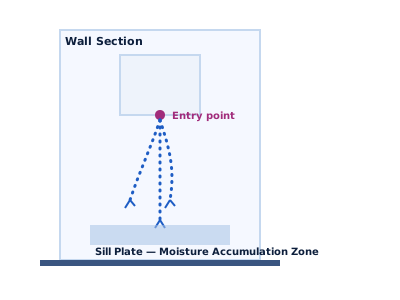
Moisture Migration
How water intrusion travels downward through a wall cavity before reaching the sill plate.
How a wall assembly holds up, or fails to hold up, against moisture
Original diagrams we use internally to explain how moisture, air, and heat actually move through a structure.
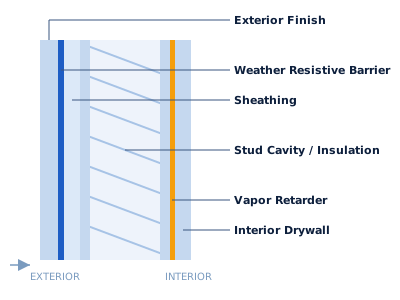
Wall Assembly
The layered components of a typical wall system, from exterior finish to interior drywall.
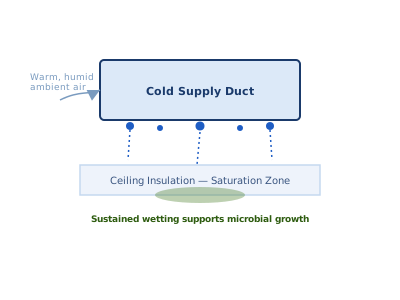
Condensation Paths
How condensation on a cold surface can saturate surrounding materials over time.
Moisture Migration
How water intrusion travels downward through a wall cavity before reaching the sill plate.
A typical wall assembly is built in layers, from the exterior finish inward through a weather barrier, sheathing, the stud cavity, a vapor retarder, and finally interior drywall. Each layer is designed to manage moisture in a specific way. When any one layer fails or is improperly detailed, water or vapor can move through the assembly in ways the original design never intended, which is why understanding the full wall assembly, not just the surface finish, matters when investigating an intrusion problem.
Moisture mapping and thermal imaging
Our inspection process combines thermal imaging, moisture mapping, building pressure evaluation, HVAC inspection, and indoor air quality testing to identify conditions a routine walkthrough would miss.
Moisture Mapping: Pin & Pinless Meters
Moisture mapping uses both pin and pinless moisture meters to build a quantified picture of where a material is wet, and how wet it actually is. Pinless meters scan a wall or ceiling surface non-invasively to screen larger areas quickly, while pin meters take a targeted reading at a specific depth once an area of concern has been identified. Used together, they let us move from a general area of suspicion to a precise, documented reading at the point that matters.
Thermal Imaging: Finding Hidden Moisture
Thermal imaging plays a critical role in locating moisture that has not yet become visible on a surface. A hidden moisture source typically appears as a distinct temperature anomaly under infrared, because wet materials hold and release heat differently than dry ones. This lets us scan large areas efficiently and target moisture meter readings to the exact anomaly, rather than guessing at where a problem might be hiding behind drywall or above a ceiling.
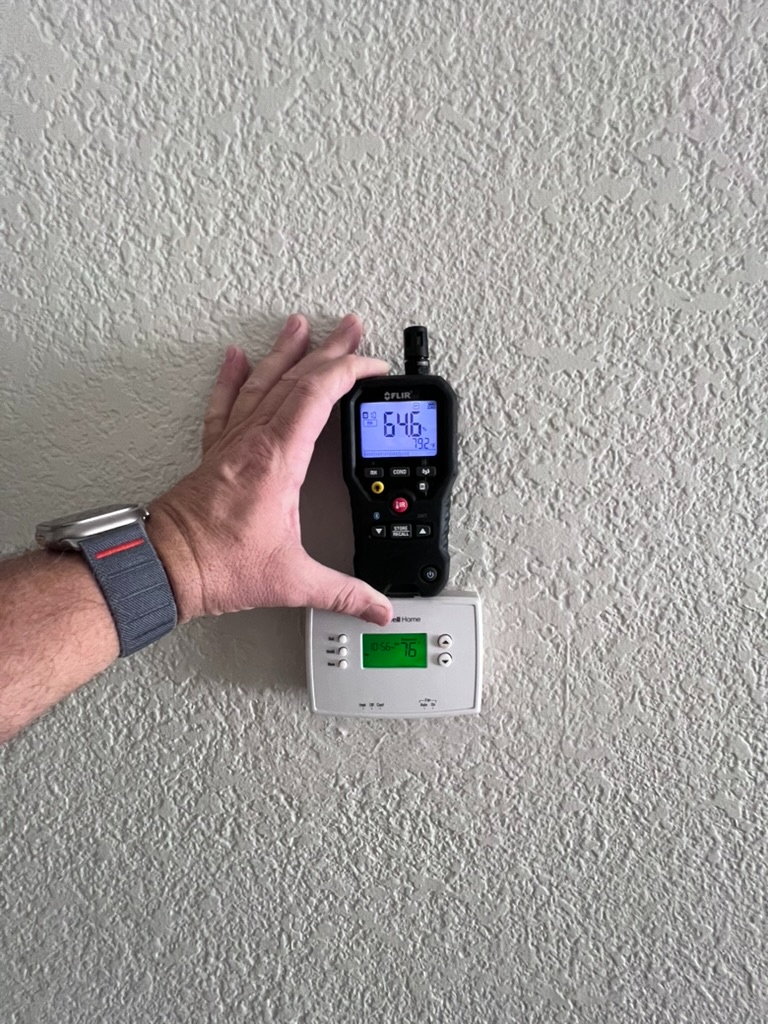
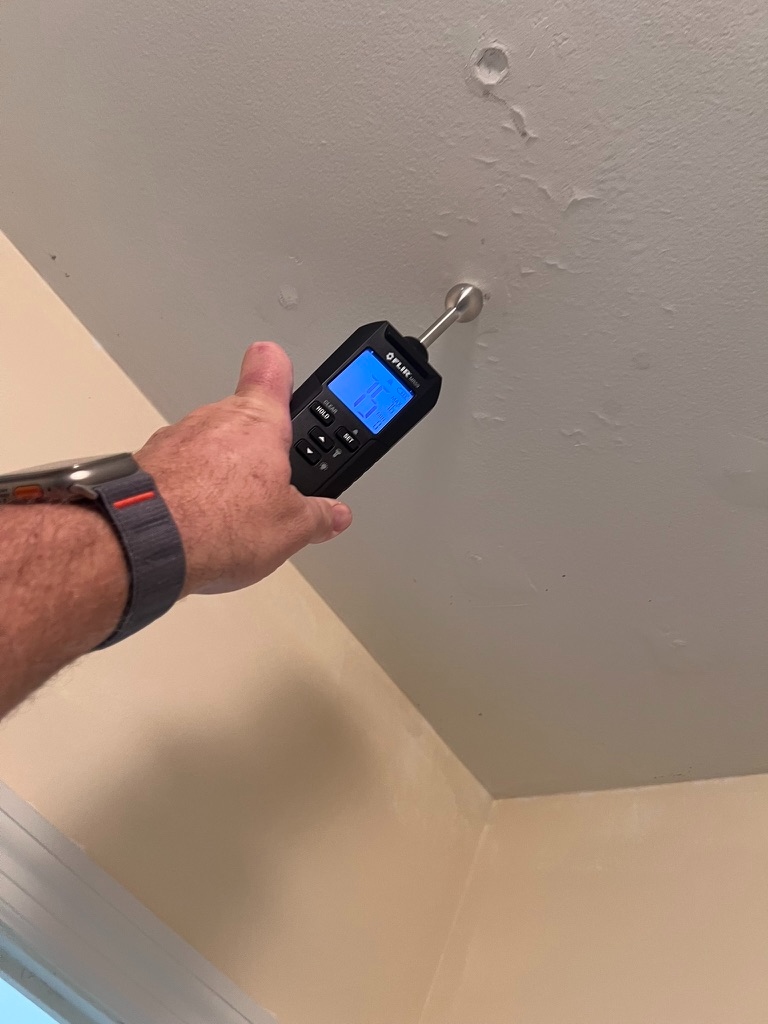
Wall Moisture Reading
A pin or pinless meter reading taken directly on a wall surface to quantify moisture content.
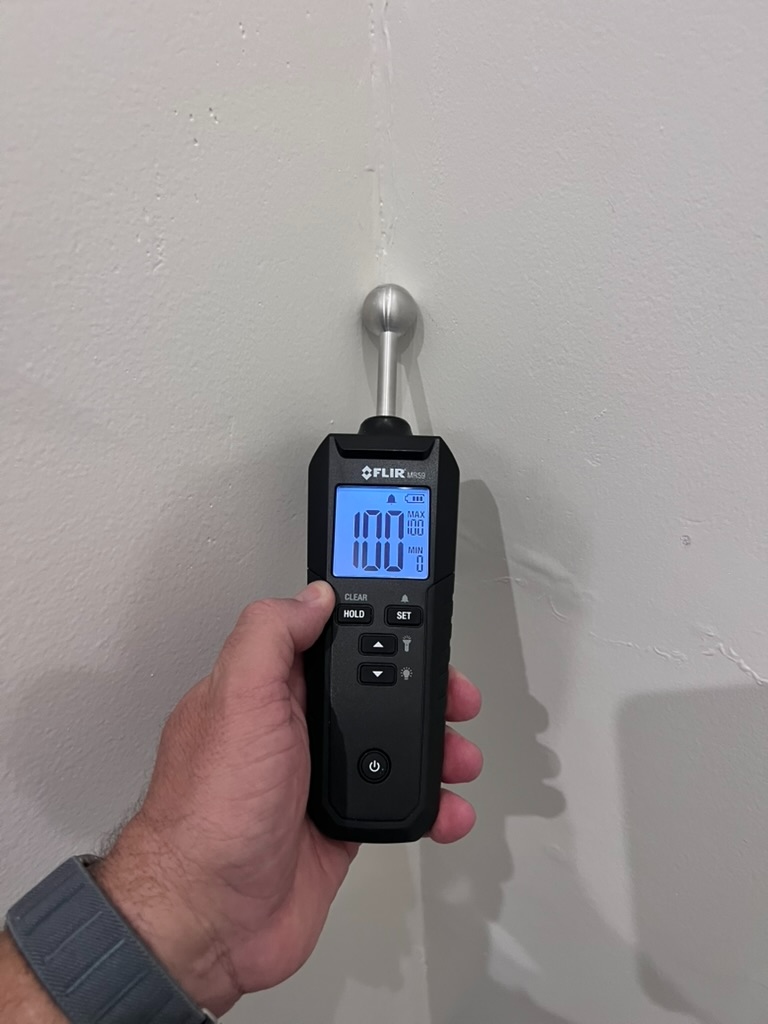
Saturated Wall Reading
A quantified reading confirming saturation at a wall assembly already showing visible signs of intrusion.
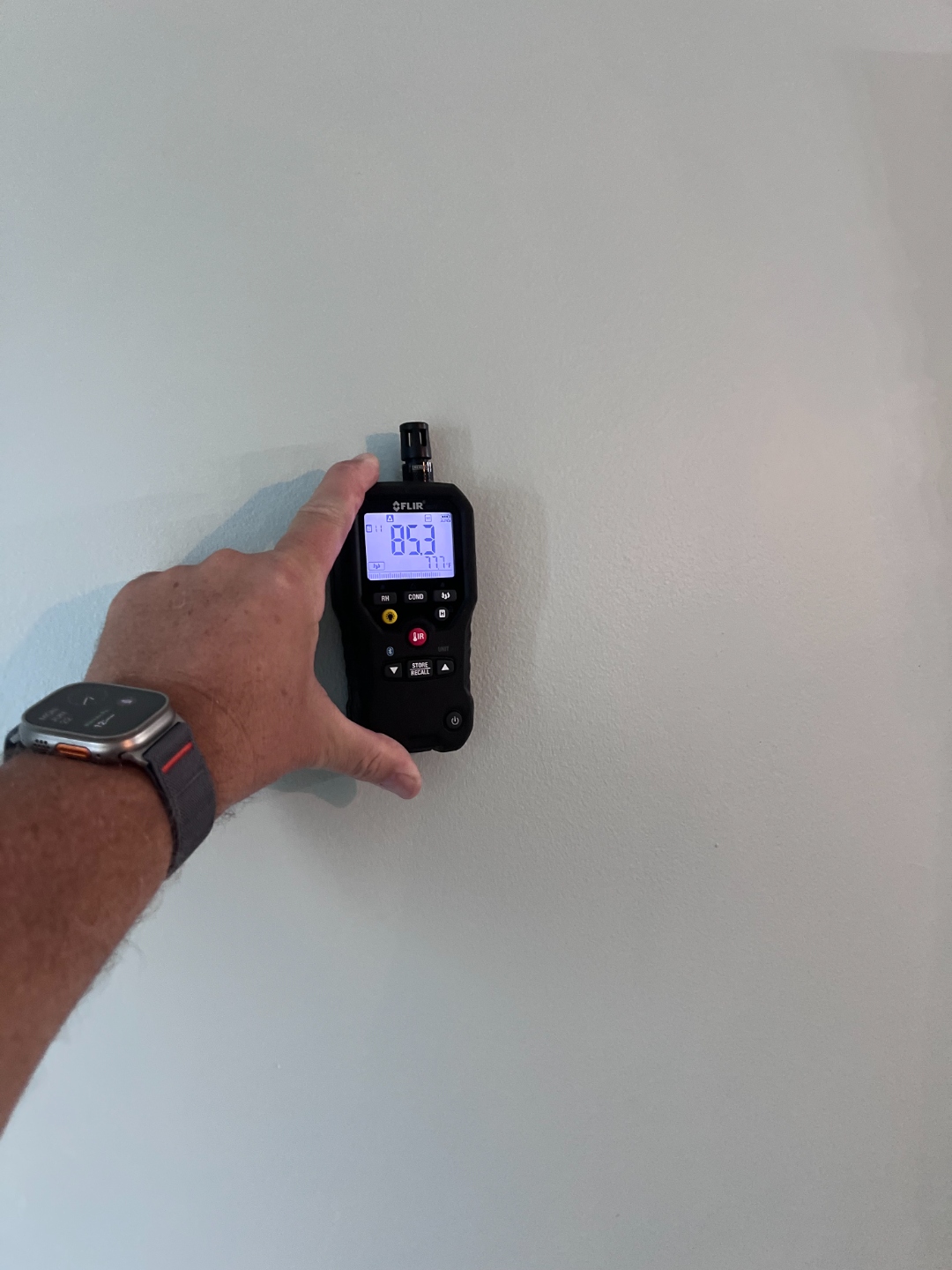
Moisture Meter Documentation
Quantified moisture content readings taken directly at the point of concern, and documented for the report.
Root-cause tracing, not just wet-spot documentation
Finding a wet spot is the easy part. Tracing that moisture back through a wall cavity, past a vapor retarder, along a sill plate, or to a specific penetration in the building envelope, is what actually explains why the problem occurred. Our moisture investigations are built around this distinction: identifying the building's structural and mechanical root cause, not simply photographing where water happened to surface.
Because Home Enviro performs inspection and testing only, and never performs remediation, our only interest in a moisture investigation is an accurate, defensible account of where the water is coming from and how it is moving through the structure. That distinction matters when a repair depends on getting the diagnosis right the first time.
Moisture & water intrusion, explained
Common questions about how we trace water intrusion back to its source.
Water intrusion typically enters through the roof, window and door openings, wall penetrations such as pipe or conduit sleeves, and plumbing leaks inside walls or below slabs. Once inside the building envelope, it moves along framing and cavity surfaces rather than staying at the original entry point, which is why the visible stain or wet spot is often far from the actual source.
Moisture that enters a wall assembly tends to travel downward through the cavity before it reaches the sill plate, following the path of least resistance along studs, sheathing, and insulation. A stain near the floor can be the endpoint of water that entered much higher, near a roofline, window, or wall penetration, which is why tracing the migration path back through the wall assembly matters more than photographing the stain itself.
Pin meters use two small probes inserted into a material to measure moisture content at a specific depth, while pinless meters use electromagnetic sensing to scan a surface non-invasively and locate elevated moisture without puncturing the material. Both are used together during moisture mapping to quantify readings at a point of concern and to screen larger wall or ceiling areas before deciding where to investigate further.
Thermal imaging documents temperature differences on a surface, and wet materials typically read as a distinct temperature anomaly compared to the surrounding dry area because moisture changes how a material holds and releases heat. This lets an inspector identify a hidden moisture source and target moisture meter readings to the exact anomaly, well before staining, odor, or visible damage would otherwise reveal a problem.
Moisture problems rarely travel alone
Water intrusion is frequently the root cause behind mold growth and HVAC-related indoor air quality issues.
Mold Inspection
Systematic identification and documentation of fungal growth, its extent, and its underlying moisture source.
HVAC Mold Inspections
Inspection of air handlers, ductwork, and coils for microbial growth, condensation defects, and airflow issues.
Book an Inspection
Schedule an independent moisture and water intrusion investigation for your property.
Trace the source before you repair the symptom
Same-day service available throughout Miami-Dade, Broward, and Palm Beach Counties.