A mold inspection built around how Pembroke Park actually houses people
From the town's 17 mobile home parks to newer townhomes on its western edge and site-built homes near its industrial corridors, Pembroke Park's housing stock is genuinely different from its Broward neighbors. Home Enviro adjusts its inspection approach to match.
A quick look around a mobile home or a rental townhome tells you very little
In a town where a large share of housing is manufactured rather than site-built, the places moisture actually hides are not always the places a homeowner thinks to check.
Visible staining on a ceiling or baseboard is often the last sign of a problem, not the first. In a site-built concrete block home, that usually means the moisture source has been active behind drywall or under flooring for some time. In a manufactured home, the equivalent hidden spaces, the underbelly vapor barrier, the marriage-line seam between sections of a double-wide, or the cavity behind skirting, are enclosed differently and inspected differently. Home Enviro has served South Florida since 2016, supported by more than 20 years of industry experience. That experience includes recognizing when a structure's construction type changes where an inspection needs to focus.
Moisture concerns in Pembroke Park
Pembroke Park's housing profile is unlike most other Broward County municipalities, and that difference matters for how a mold inspection should be approached.
A town built around manufactured housing
Close to half of Pembroke Park's roughly 6,260 residents live in mobile homes, spread across 17 mobile home parks, four of which are dedicated to RV camping. This is a housing composition unlike any neighboring city in Broward County. Manufactured homes have their own moisture pathways: underbelly vapor barriers, skirting ventilation, marriage-line seams, and roof and window seals that behave differently than a site-built home's walls and slab.
A small, largely built-out town
At only 1.666 square miles, Pembroke Park is one of the smallest municipalities in Broward County. By 2008, less than 4% of developable land remained vacant, meaning most of the town's housing, including its mobile home parks, dates to the late 1950s incorporation era through the 1970s and 1980s, with newer apartments, villas, and townhomes concentrated on the town's western edge.
Industrial and warehouse zoning next to homes
Pembroke Park's M-1 Industrial District allows industrial uses to sit directly adjacent to residential and business districts, and the town has attracted substantial modern Class A warehouse development due to its access to I-95 and Florida's Turnpike. Homes and mobile home parks located near these industrial corridors have a property context that a standard suburban inspection checklist would not capture.
Water also makes up about 14% of the town's total area, a notably higher share than most cities in this part of Broward County. Beyond that general geographic fact, we did not find independently verified FEMA flood zone designations, named canals, or a documented hurricane damage history specific to Pembroke Park, so this page does not make claims in those areas.
An approach matched to the structure in front of us
The same core methodology applies everywhere, but Pembroke Park's mix of manufactured and site-built housing changes where we look first.
Visual Assessment
A systematic review of the structure, whether manufactured or site-built, with particular attention to skirting, roof penetrations, and window and door seals on mobile homes.
Moisture Investigation
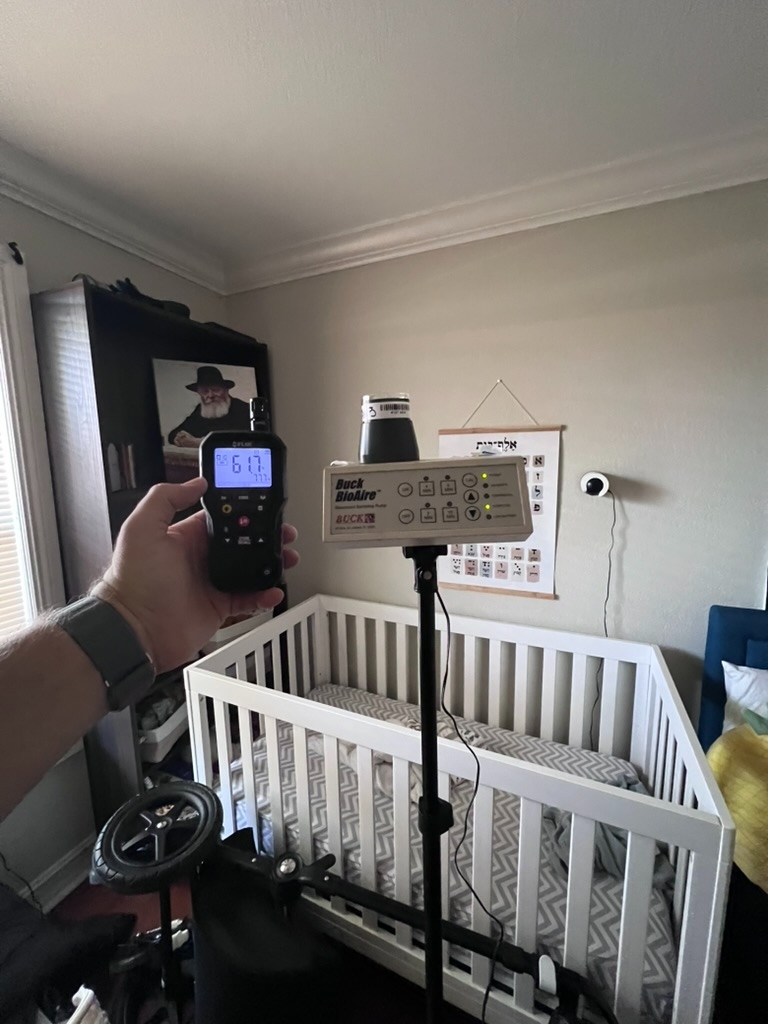
Pin and pinless moisture meter readings across suspect surfaces, including underbelly access points and marriage-line seams where applicable, and slab or wall assemblies in site-built homes.
Thermal Imaging
Infrared scanning identifies temperature differences consistent with hidden moisture. Thermal imaging does not detect mold directly. It flags anomalies that warrant closer investigation with moisture meters or sampling.
HVAC Evaluation
Assessment of air handlers, ductwork, and condensate management, relevant both to newer multifamily units on the town's western edge and to older cooling systems in long-standing mobile homes.
Mold and Air Quality Testing
Air and surface sampling, processed by independent, accredited laboratories, when scientifically warranted by what the visual assessment and instrument readings show.
We document the condition. We do not sell the fix.
Home Enviro performs inspection, testing, and Post-Remediation Verification only. We never perform remediation, removal, or repair work of any kind, in a mobile home, a townhome, or a warehouse-adjacent single-family property.
That separation matters most in a town like Pembroke Park, where housing types vary so widely from one street to the next. A contractor who profits from remediation work has an incentive to find something to fix. Our only product is an accurate, independently documented understanding of what is actually happening inside a structure, whether that structure is a decades-old mobile home or a newer townhome, so the owner or resident can make their own decision about next steps without our findings being shaped by a sale.
Buying, selling, or managing property in Pembroke Park
Whether the property is a mobile home on a rented lot, a mobile home with owned land, or a newer townhome, an independent inspection gives every party a shared, unbiased set of facts.
Buyers of Manufactured Homes
Manufactured home sales move quickly and often skip a full building-science-level review. An independent inspection before closing documents the underbelly, skirting, and roof condition specifically. Related: Home Buyers Mold Inspections.
Sellers
A pre-listing inspection creates a documented record of a property's condition at a point in time, useful for both mobile home and site-built sales in a town where the housing stock varies so much block to block.
Mobile Home Park Operators and Property Managers
Operators managing multiple units across one of the town's 17 mobile home parks benefit from a consistent, independent inspection standard applied unit to unit. See our Commercial Mold Inspections service.
When sampling may be appropriate
Not every inspection requires laboratory sampling. Air or surface sampling is typically appropriate when a visual assessment or instrument readings identify suspected microbial growth that needs species-level confirmation, when an occupant reports persistent symptoms without a visible source, when a real estate transaction requires documented findings, or when a property has a history of water intrusion. A single air sample never proves the absence of concealed mold. It characterizes conditions at one point in time in one location, which is why sample placement is based on what the visual and moisture-mapping findings actually show.
What you receive
Documented Findings
Photos, moisture readings, and thermal imagery from the on-site visit, clearly labeled by location, including mobile home-specific areas like skirting and underbelly access where applicable.
Laboratory Results
When sampling was performed, full independent laboratory results are included, with sample locations and methodology documented.
Independent Recommendations
Clear next-step recommendations based only on the evidence gathered, with no financial interest in whether remediation work follows.
Pembroke Park mold inspection questions
Yes. Close to half of Pembroke Park's residents live in one of the town's 17 mobile home parks, and manufactured housing has moisture pathways, such as belly-board and undercarriage vapor barriers, marriage-line seams on double-wides, and skirting ventilation, that differ from a site-built concrete block home. Our inspection approach is adjusted to the construction type in front of us rather than applied as a one-size-fits-all checklist.
Pembroke Park's M-1 Industrial District allows industrial uses to sit directly next to residential and business districts under the town's own zoning code, and the town has attracted substantial modern warehouse development near I-95 and Florida's Turnpike. Proximity to industrial or warehouse operations is a separate consideration from mold and moisture, but it is part of the property context we document. An indoor air quality assessment can be paired with a mold inspection when a homeowner has broader air quality questions. See our Indoor Air Quality Testing service.
Mobile and manufactured homes can develop moisture problems around roof penetrations, window and door seals, plumbing penetrations through the floor, and the underbelly vapor barrier. Because the crawlspace beneath a manufactured home is often shallow and enclosed by skirting, trapped moisture underneath can go unnoticed longer than it would in a home with a standard vented crawlspace or slab foundation. A visual assessment paired with moisture mapping is used to check these areas specifically.
Yes, provided you have authority to request an inspection of the home itself, whether you own the manufactured home on a rented lot or own both the home and the land. Our inspection addresses the structure and its systems, not the underlying land lease.
The underlying methodology, visual assessment, moisture mapping, thermal imaging, and sampling when warranted, stays consistent. What changes is where we expect to find risk. In newer multifamily construction we focus more on HVAC condensate handling and shared-wall assemblies; in manufactured housing we focus more on underbelly moisture, skirting ventilation, and roof and window seals.
No. Home Enviro performs independent inspection, testing, and Post-Remediation Verification only, and never performs remediation, removal, or repair work of any kind. If mold-like growth is documented, our report gives you an independent basis for hiring a remediation contractor, without us having any financial interest in that decision.
Mold inspection in neighboring Broward cities
Request an independent mold inspection in Pembroke Park
Serving mobile home parks, townhomes, and site-built properties throughout Pembroke Park and the rest of Miami-Dade, Broward, and Palm Beach Counties.