Independent Research & Investigation Hub Since 2016
(954) 994-8847
Weston, Florida · Case Study Summary

Deteriorated Plenum Tape Adhesive Allows Contaminated Air Into a Weston, Florida HVAC System

An independent Home Enviro HVAC mold inspection found that failed plenum tape adhesive on a garage-located air handler had opened a pathway for garage air, dust, fiberglass particles, and mold spores to enter the home's duct system.

Property LocationWeston, Florida
Inspection TypeResidential HVAC Mold Inspection
System LocationAir handling unit located in attached garage
Root CauseDeteriorated plenum tape adhesive
Project Overview

Residential HVAC Mold Inspection in Weston, Florida

Home Enviro was contacted to perform an independent HVAC mold inspection at a Weston, Florida residence after the homeowner reported persistent musty odors and discoloration around several supply vents. The air handling unit for the home was located in the attached garage.

Customer Concern

What Prompted the Call

The homeowner had replaced air filters regularly, yet the occupants continued to notice recurring dust and ongoing concerns about indoor air quality, pointing to a source inside the mechanical system itself.

Reported Conditions

  • Persistent musty odors throughout the residence
  • Visible discoloration around several HVAC supply vents
  • Recurring dust accumulation despite regular filter changes
  • Ongoing concerns about indoor air quality
  • Air handling unit located in the attached garage
Methodology

Inspection Procedures

To evaluate the HVAC system, ductwork, and indoor environment, Home Enviro performed the following procedures:
Visual HVAC & Duct Inspection Moisture Measurements Thermal Imaging Air Handler & Plenum Inspection Accessible Duct Connection Review Mold Sampling Where Appropriate
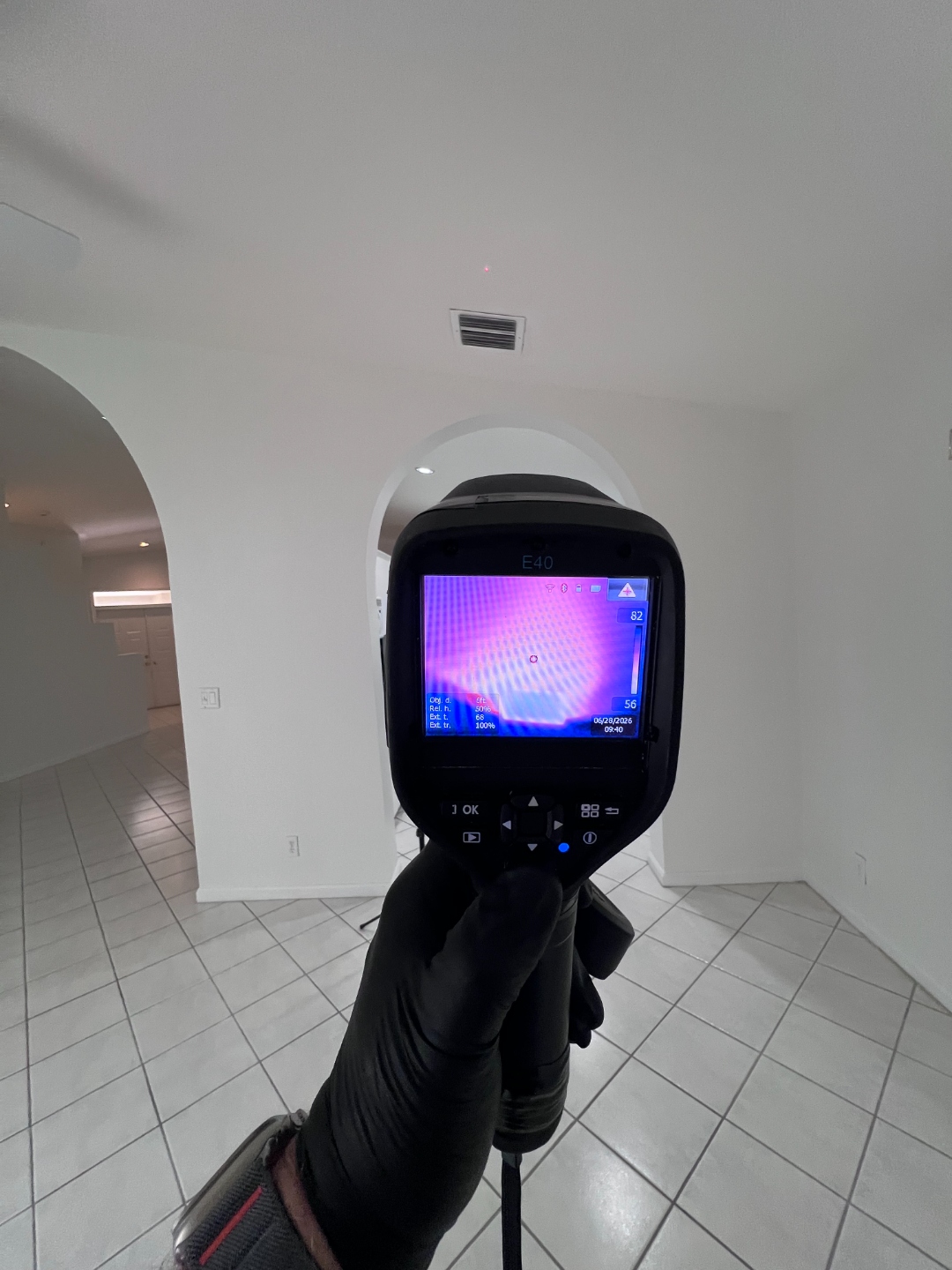
FLIR thermal imaging camera showing a ceiling temperature scan near a supply vent in the home's main living area
Thermal imaging identifies a temperature gradient near a ceiling supply vent during the room-by-room survey.
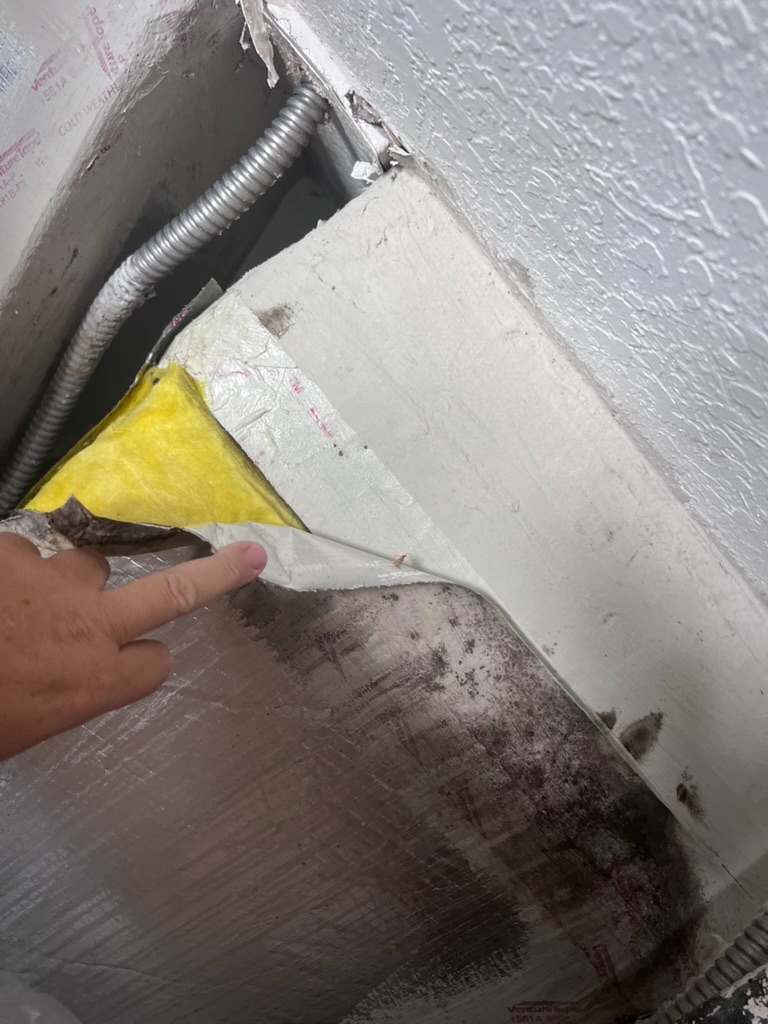
A hand pointing at a section of failed tape seal at a duct connection, with mold visible below the gap and yellow fiberglass insulation exposed
The inspector documents a failed tape seal directly, with mold visible immediately below the gap.
Findings

Key Findings in Brief

The inspection revealed significant deterioration of the adhesive on the HVAC plenum tape surrounding the air handling unit, creating gaps that allowed contaminated garage air, dust, fiberglass particles, and fungal spores into the system.
  • Significant deterioration of HVAC plenum tape adhesive
  • Visible gaps developed around the plenum and duct connections
  • Visible microbial growth on the HVAC cabinet and plenum assembly
  • Contamination identified within portions of the connected duct system
  • Contaminants distributed into occupied areas despite the garage being unconditioned space
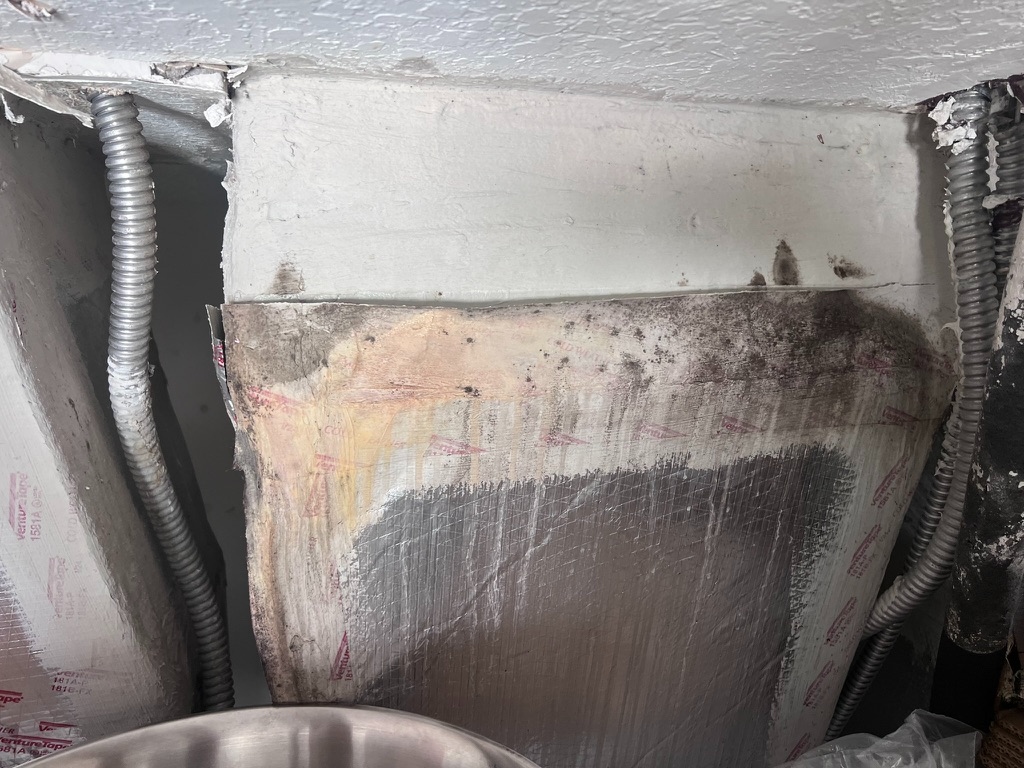
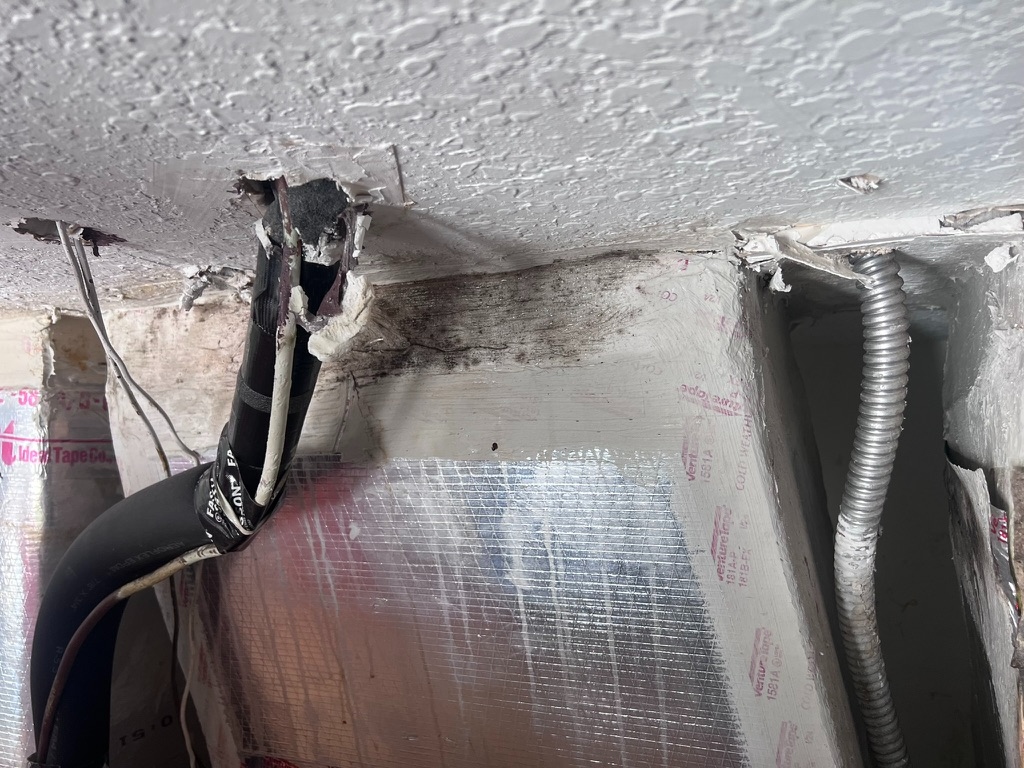
Wide view of an HVAC plenum insulation panel showing dark mold growth along the top seam where the panel meets the ceiling framing, with visible tape seams
A wide view of the plenum insulation panel shows dark microbial growth concentrated along the top seam, adjacent to the ceiling framing.
Close-up of black HVAC tape wrapped around a duct connection at a ceiling penetration, with dark mold staining visible on the insulation panel below
Deteriorated sealing tape at a duct connection, documented alongside dark microbial staining on the surrounding insulation.
Why This Happens

A Mechanical Failure, Not a Water Leak

HVAC plenum tape is not designed to last indefinitely. As its adhesive ages under heat, humidity, and normal system operation, it loses its bond and separates from the metal it seals. The negative pressure created by the air handler then draws mold spores, dust, fiberglass particles, garage air contaminants, and elevated humidity directly into the system, distributing them throughout the home's ductwork every time the HVAC operates.

Why This Matters

Even without an active plumbing or roof leak, failed air sealing around an HVAC system can introduce mold spores and other airborne contaminants into ductwork, affecting indoor air quality throughout a home.

Next Steps

Professional Recommendations

Corrective work should be performed by a qualified HVAC contractor, with Home Enviro providing independent findings and verification.

  1. Remove and replace all deteriorated HVAC tape and failed plenum seals.
  2. Properly reseal all plenum and duct connections using approved HVAC sealing materials.
  3. Perform professional cleaning of the affected HVAC system and contaminated ductwork.
  4. HEPA vacuum and clean the air handler cabinet and accessible mechanical components.
  5. Correct any moisture conditions contributing to microbial growth.
  6. Replace HVAC filters following system cleaning.
  7. Perform a post-remediation verification inspection after corrective work has been completed.
Selected Photo Evidence

Documentation From the Field

A selection of original photographs captured during the Weston, Florida inspection. Additional photo documentation and the complete narrative are available in the full case study.

Wide view of the HVAC plenum insulation panel showing dark mold growth along the top edge where it meets the ceiling framing
Plenum Insulation Panel, Wide View
Close-up of deteriorated black tape at a duct connection with mold staining on the insulation panel below
Deteriorated Tape at Duct Connection
A hand pointing at a section of failed tape seal at a duct connection with mold visible below the gap and exposed yellow fiberglass insulation
Failed Tape Adhesive, Documented On-Site
FLIR thermal imaging camera showing a ceiling temperature scan near a supply vent in the home's main living area
Thermal Imaging at a Supply Vent
Why This Investigation Matters

A Small Mechanical Failure, A Whole-House Problem

This case demonstrates how a relatively small mechanical failure, the deterioration of HVAC plenum tape adhesive, can contribute to widespread contamination throughout a residence. Early identification of deteriorated plenum seals, combined with proper HVAC maintenance and professional inspection, can help prevent contamination from spreading through the mechanical system.

Full Case Study

Read the Complete Investigation

This page summarizes the key findings from Home Enviro's Weston, Florida HVAC mold inspection. The complete narrative, full methodology, all inspection photographs, and detailed recommendations are published on our Express Mold Inspection case study page.

Read the Full Inspection Case Study

Ready to schedule an inspection? Call (954) 994-8847 or visit Express Mold Inspection.